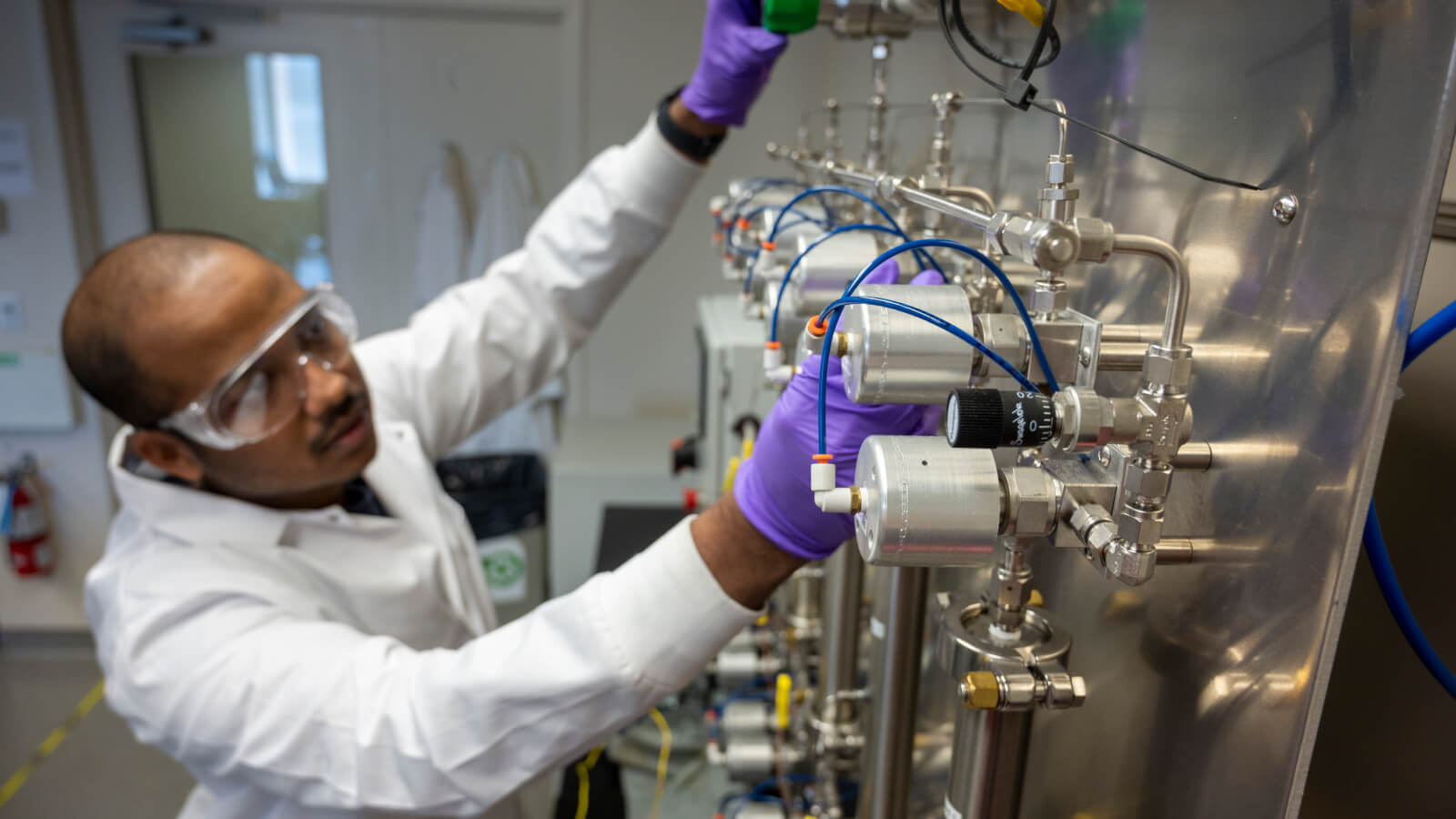

Even in the age of AI, Professor Tam, who teaches MAT E 202 - Materials Science II and MAT E 336 - Phase Transformations II, believes there's no substitute for learning by doing. While AI serves as an excellent study tool, he describes the technology as “2D” and thus cannot replicate the three-dimensional realities of working with physical systems that chemical and materials engineers deal with. “Developing critical thinking and problem-solving skills in a teaching laboratory fosters cognitive abilities that AI simply cannot replace," he says.
For example, the lab skills you learn in microscopy and analysing metals are the exact tools used to investigate product failures and ensure quality control. “By learning to interpret the microstructures of materials, students learn how to perform forensic investigation in component failures and how to optimise processing parameters to design better materials for society,” he shares.
What's more, the metallography lab challenges students to think like engineers when things go wrong. A scratched sample or over-etching can mean starting the preparation process, and it is “through these experiences, students build troubleshooting skills and confidence,” Professor Tam says.