

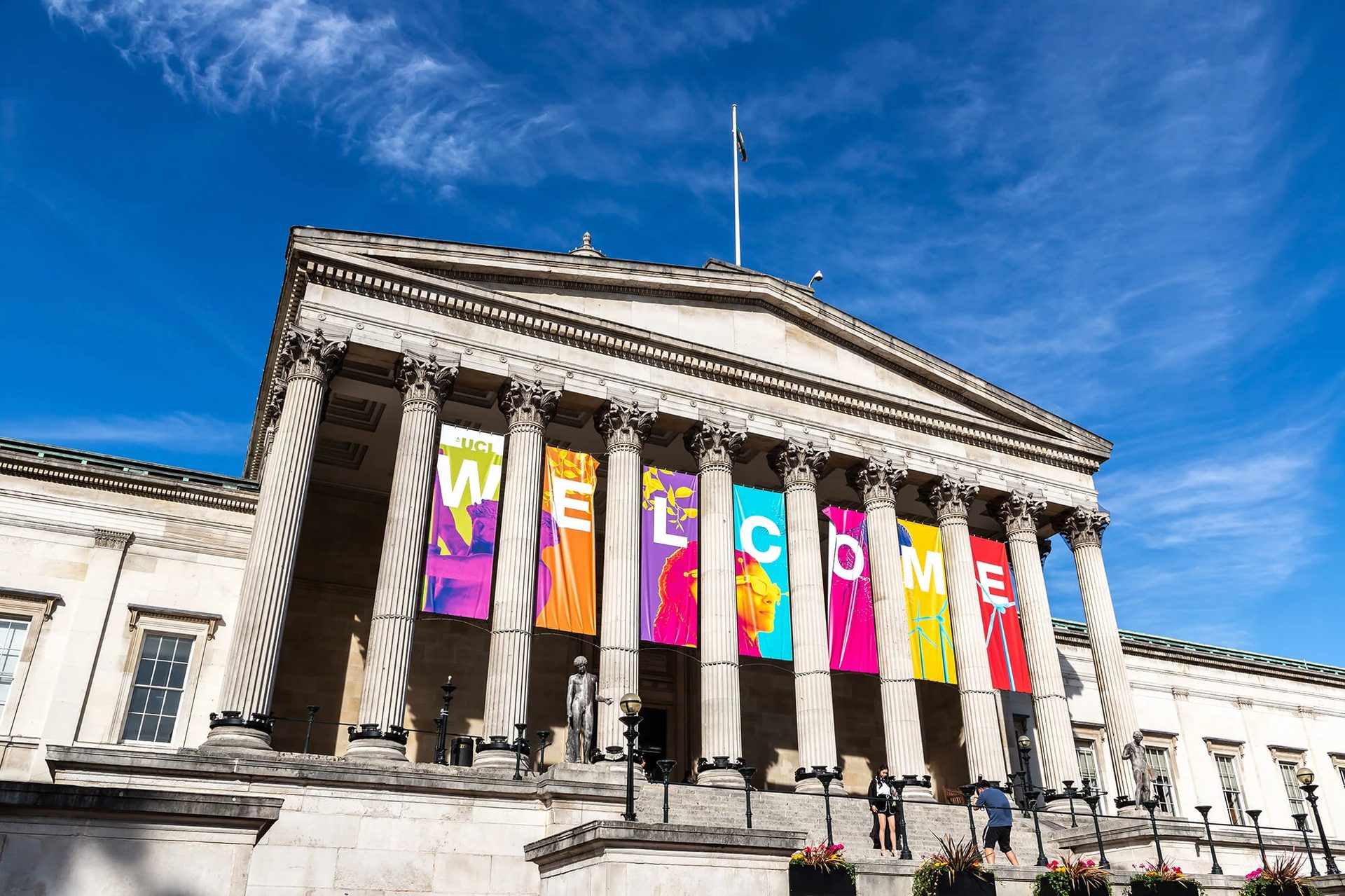

University College London, Science and Technology Studies (STS) degree
4 creative programmes nurturing transferable skills
4 creative programmes nurturing transferable skills

UCL is the first university in the world to have an entire department dedicated to the teaching and research of science and technology from a historical, political, philosophical and sociological standpoint.
Since the Department of Science and Technology Studies began in 1921 as specialists in the history and philosophy of science, it has gone on to become a pioneer on several fronts:
Largest
department of its kind in the UK
First
in the country to offer master’s degrees in this subject
First
to introduce an undergraduate degree
Today, the department continues to ask and answer the big, urgent questions: How do science and technology shape the way we live? And, just as importantly, how might they guide us towards a fairer, more humane future?
Earning an STS degree equips you to grapple with the world as it is, and as it might be. But it’s just as practical as it’s rooted in curiosity and wonder. In fact, with STS, you’ll have “flexible futures,” where you’ll gain a highly skilled general preparation for careers, emphasis on the plural.
“Our degrees allow people to follow their passions while also preparing for a wide range of careers. We build expertise and substance. We also build a broad portfolio of skills sought in today’s job market.”
Professor Joe Cain, Programme Lead for the Science Communication MSc
#1
in Asia (QS World University Rankings 2024)
#8
8 in the world (QS World University Rankings 2024)
1
year to complete Master of Arts
What “flexible futures” could mean for you
Depth and breadth
With an STS degree, you’ll explore topics from many angles and regularly share classes with students from all other UCL faculties. In the morning, you could be debating with natural science students. Later, you could be working with the arts students. Nowhere else offers this mix of subjects under one roof to prepare you to solve complex problems that require integrated approaches.
Skills that set you apart
Being able to think independently, reason clearly, and make sense of complex information are skills employers value. That's why STS helps you build a versatile set of skills so you can stand out wherever you go.
Comprehensive support
Community matters at STS, and students are right at the heart of it. The department keeps student-to-tutor ratios low so you can receive individual mentoring. It organises paid summer internships and volunteering opportunities and works closely with UCL Careers and other support teams too.
Results that count
Employers want to see what you’ve actually done. At STS, the goal is for every student to graduate with a diverse portfolio that reflects their experience and skills.
Beyond the lab
There are many ways to work in science besides becoming a scientist. STS degrees are for students interested in science communication and science policy, as well as those who studied science at school but want to explore other paths.
Depth and breadth
With an STS degree, you’ll explore topics from many angles and regularly share classes with students from all other UCL faculties. In the morning, you could be debating with natural science students. Later, you could be working with the arts students. Nowhere else offers this mix of subjects under one roof to prepare you to solve complex problems that require integrated approaches.
Skills that set you apart
Being able to think independently, reason clearly, and make sense of complex information are skills employers value. That's why STS helps you build a versatile set of skills so you can stand out wherever you go.
Comprehensive support
Community matters at STS, and students are right at the heart of it. The department keeps student-to-tutor ratios low so you can receive individual mentoring. It organises paid summer internships and volunteering opportunities and works closely with UCL Careers and other support teams too.
Results that count
Employers want to see what you’ve actually done. At STS, the goal is for every student to graduate with a diverse portfolio that reflects their experience and skills.
Beyond the lab
There are many ways to work in science besides becoming a scientist. STS degrees are for students interested in science communication and science policy, as well as those who studied science at school but want to explore other paths.
Where STS can take you
84.8%
of undergraduates enter highly skilled work or further study after graduating. This makes UCL #5 in the UK across Russell Group universities.
61.1%
of UCL graduates remain in the UK to start their careers.
US$55,572
reported median salary of graduates across various job sectors
91%
of STS graduates say their current activity feels meaningful, and 81% say it aligns with their future plans.