Partner content



Transform public health with The University of Hong Kong

Transform public health with The University of Hong Kong

Transform public health with The University of Hong Kong
Growing up in the Philippines, Patricia Denise Ang saw how poor hygiene and limited awareness often led to disease outbreaks, many preventable. Time spent on social media, a national pastime, bred even more misinformation about healthy and well-being.
Determined to be part of the solution, Patricia signed up for the University of Hong Kong’s (HKU) Master of Public Health (MPH). She vowed to learn how to address diseases at a population level and get better at communicating about health, so people could make more informed choices and build healthier communities.

“I specifically chose the HKU MPH because of the institution’s stellar track record in managing infectious disease outbreaks over the past few decades, including the 1997 H5N1 avian influenza and the 2003 SARS (severe acute respiratory syndrome) outbreak. Plud, the institution is CEPH (Council on Education for Public Health)-accredited, which gives me further professional development options for post-graduation.”
Patricia, Master of Public Health, Control of Infectious Diseases (CID)

IBM and Columbia University are partnering to make data centres more energy-efficient, as these facilities consume around 2% of U.S. energy supplies according to the Department of Energy. They are modelling AI's energy use, designing low-power chips, reducing software inefficiencies, and optimising system operations to address this issue.

V. Faye McNeill, professor of chemical engineering, is working with partners across the Global South to expand air quality monitoring in India, generate new air pollution data in Africa, and build local capacity in air quality science. The team’s success has led to informed policy decisions and improved air management across various regions.
A campus designed for impact
An MPH that fits your goals
HKU’s 69-credit MPH programme offers plenty of flexibility, with options to study full-time for one year or part-time over two years. You can choose from four concentrations. Their well-structured curriculum, along with a supervised practicum at a public health agency, healthcare organisation, NGO, and more, has benefitted Patricia in many ways:
An MPH that fits your goals
HKU’s 69-credit MPH programme offers plenty of flexibility, with options to study full-time for one year or part-time over two years. You can choose from four concentrations. Their well-structured curriculum, along with a supervised practicum at a public health agency, healthcare organisation, NGO, and more, has benefitted See in many ways:
Public health up close
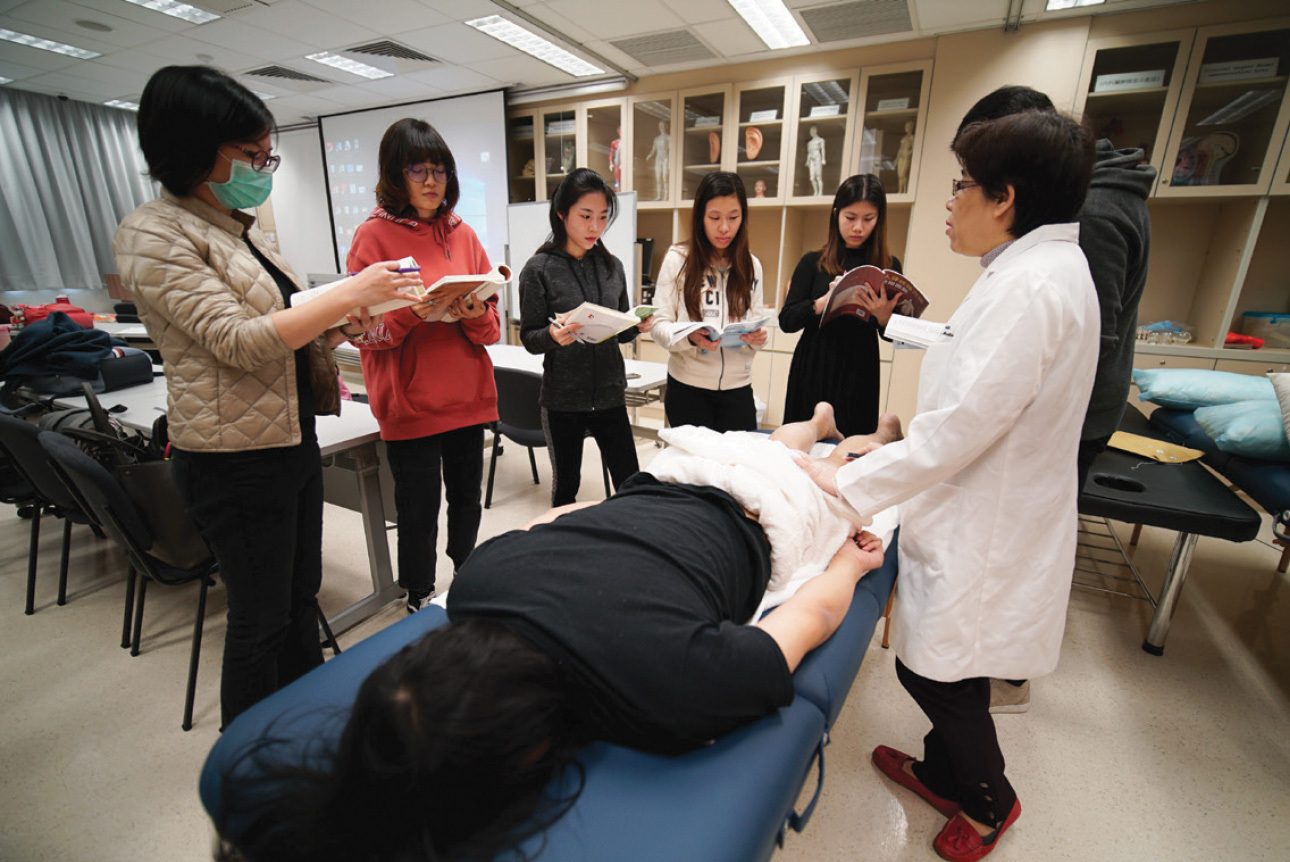
The MPH starts with evidence-based in-depth lectures that explore infectious diseases, how each spreads, and the biology behind them. Professors, many of whom are renowned experts in seasonal and pandemic influenza, bring these topics to life. They break down the microbiological basics of viruses and explain how genetic reassortment constantly creates new strains that can lead to outbreaks. Courses often extend beyond biology, encouraging you to think about the social aspects of disease control as well, such as public acceptance and political realities.
“During my One Health course, we were randomly assigned to play the role of different government sectors, including the Centres for Disease Control and Prevention (CDC), the Food and Drug Administration (FDA), the United States Department of Agriculture (USDA), and Environmental Protection Agency (EPA), in the midst of the real-life H5N1 avian influenza crisis in the US,” says Patricia.
“This experience made me more aware of the challenges of multisectoral collaboration that One Health responses hinge on and that collaboration with other sectors is key, especially when interventions involve animal testing and surveillance, food testing and recalls, environmental management, as well as other non-human aspects of health.”
Multicultural learning environment
Coming from a biomedical background, Patricia initially had little exposure to global health systems. But being surrounded by classmates from different countries quickly changed that and helped her Patricia the field through a much broader lens.
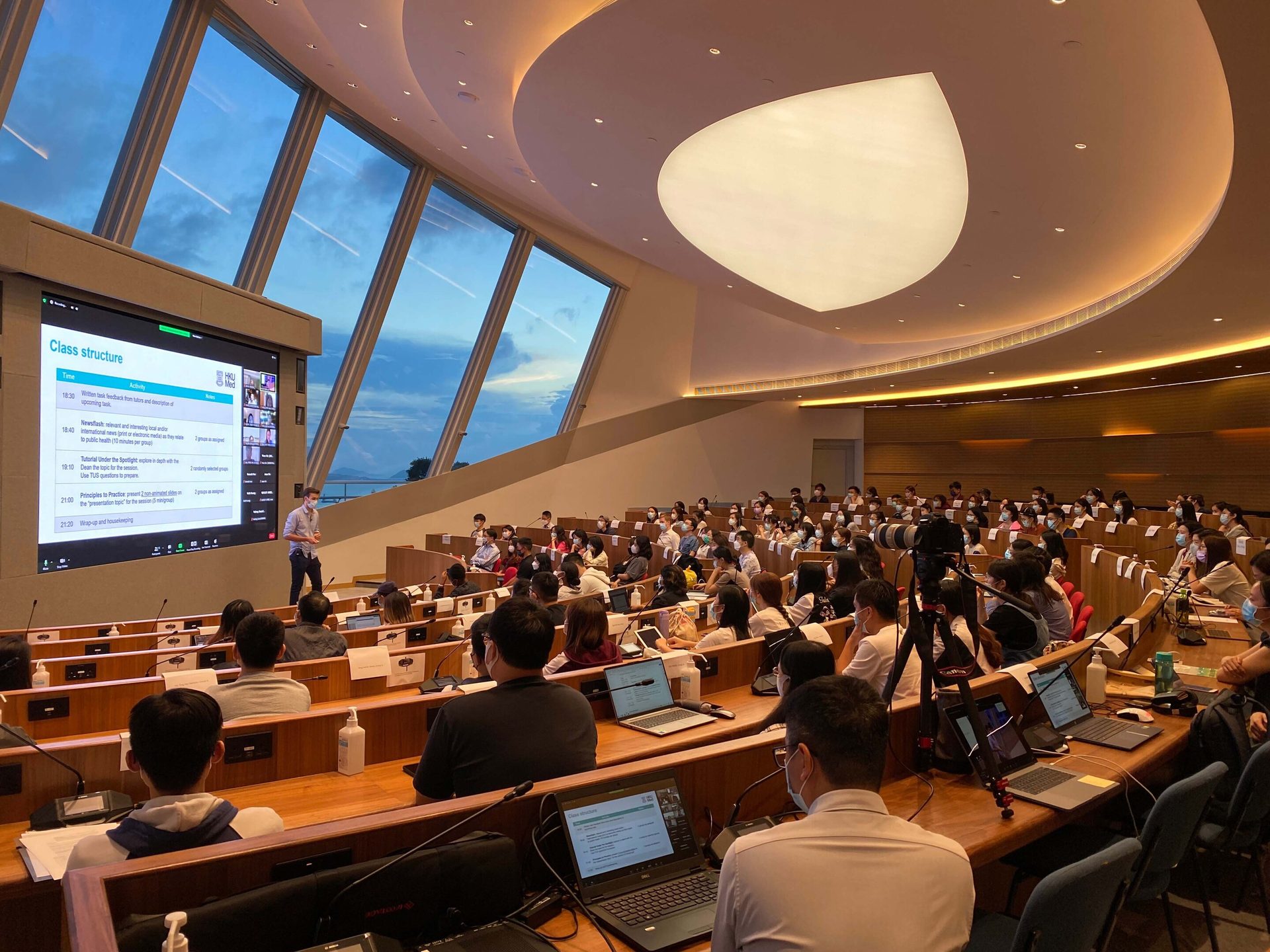
“Classroom and small group discussions were lively and interesting with diverse perspectives, especially when it comes to talking about different geographical contexts,” she says. “Studying with a multicultural cohort shifted my own biased perspectives and allowed me to learn about the gaps in other countries’ systems. In the same vein, these classmates also listen attentively when I talk about the public health (and at times, political and economic) situation in the Philippines.”

Multicultural learning environment
Coming from a biomedical background, See initially had little exposure to global health systems. But being surrounded by classmates from different countries quickly changed that and helped her see the field through a much broader lens.
“Classroom and small group discussions were lively and interesting with diverse perspectives, especially when it comes to talking about different geographical contexts,” she says. “Studying with a multicultural cohort shifted my own biased perspectives and allowed me to learn about the gaps in other countries’ systems. In the same vein, these classmates also listen attentively when I talk about the public health (and at times, political and economic) situation in the Philippines.”
Growing into a public health professional
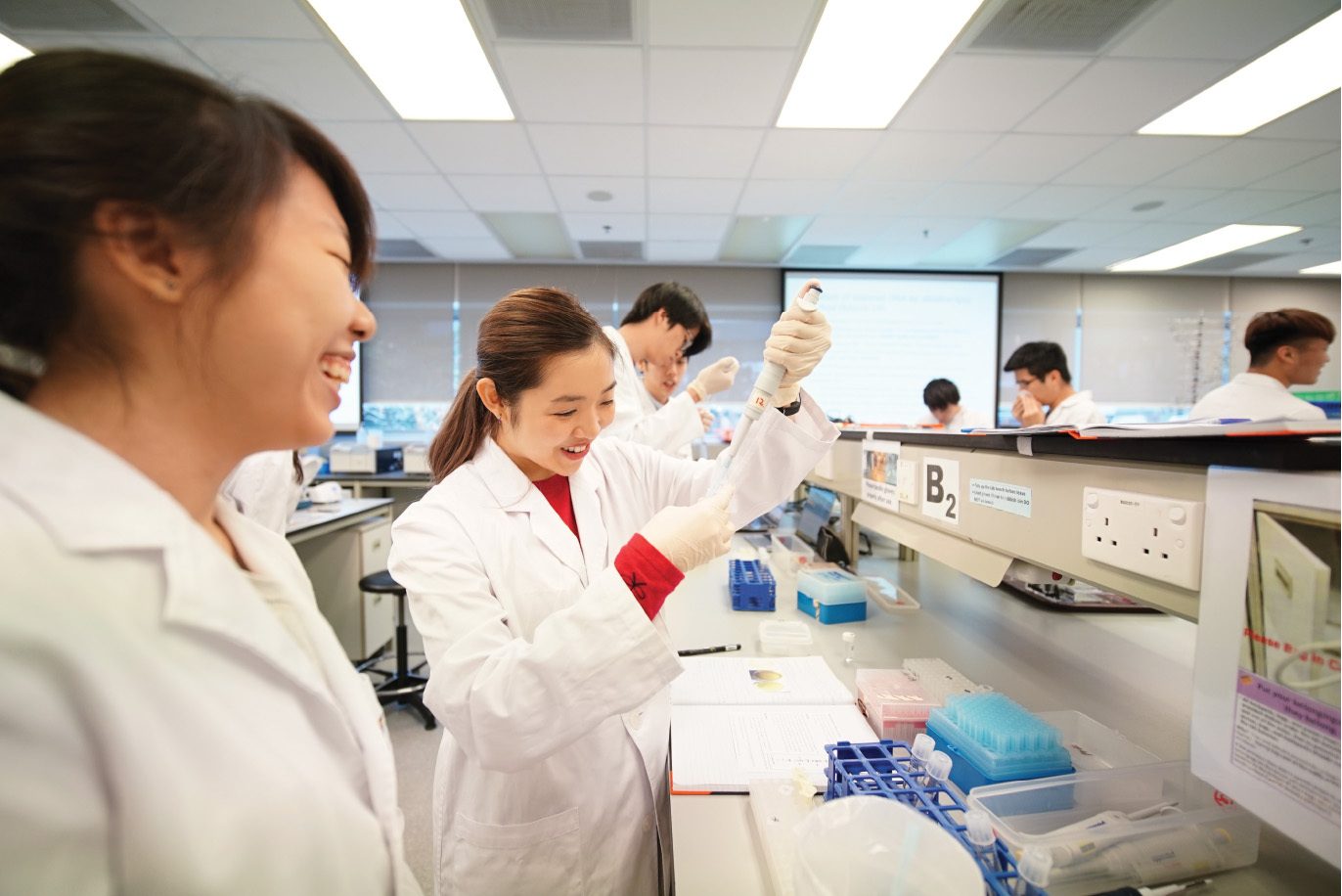
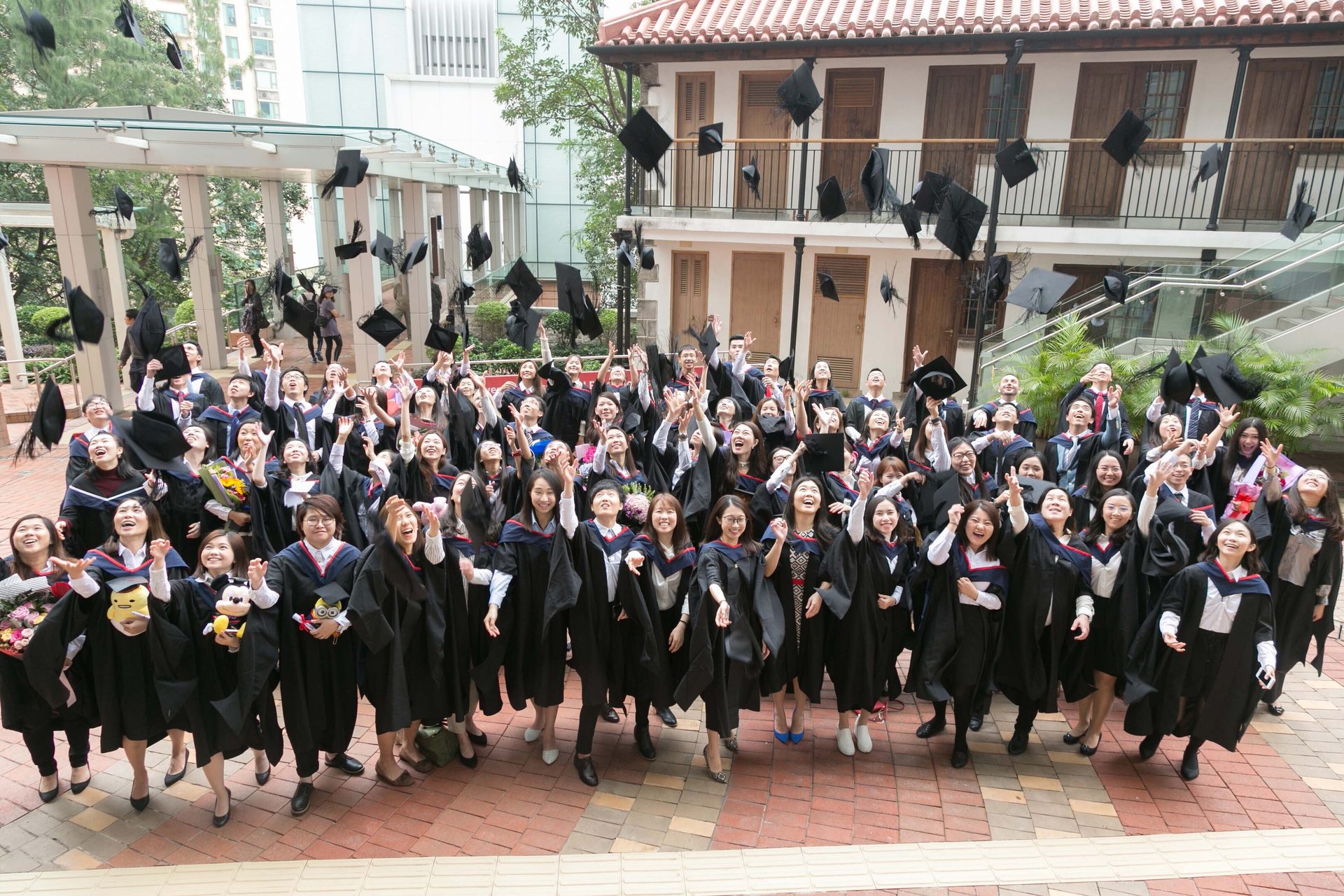
Graduates of the MPH programme leave with a broad and practical skill set that prepares them for contemporary practice. They learn how to apply scientific evidence to real-world health challenges, how to communicate clearly on issues affecting public health, and more.
Out with the old
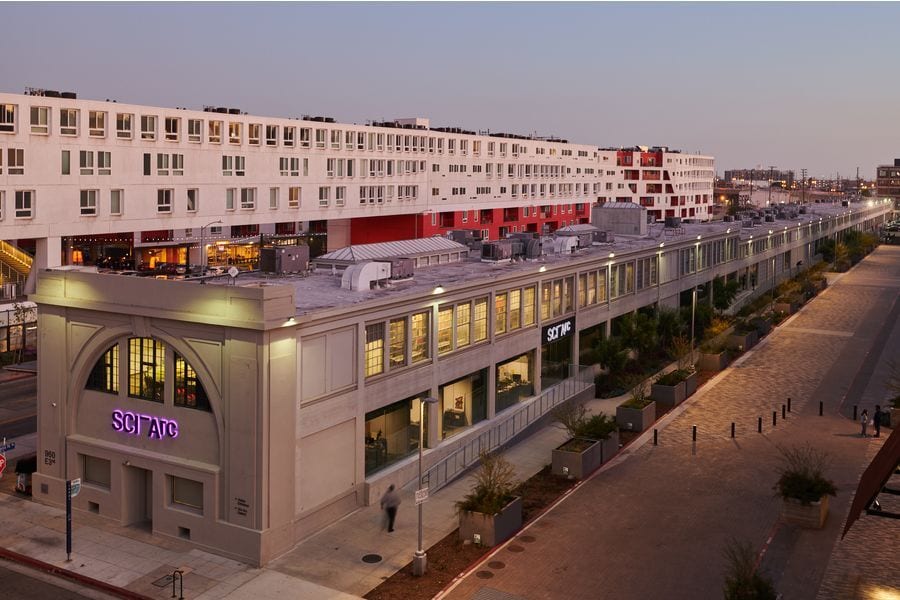
SCI-Arc relocated several times — from Santa Monica to Marina del Rey, to Beethoven Street, and finally to downtown Los Angeles. Each move was both logistical and symbolic. “Moving to the Arts District was a big deal, and a bold move,” said Kevin McMahon, who’s worked at the school since 1987. “It was the right thing to do.”
The shifting geography of the school mirrored its belief in transformation. “This place is a chameleon,” said International Advisor Lisa Russo, who joined in 1986. “Just when you’re getting comfortable, you’ve got to get comfortable in a different way.”
This is why the architect, in SCI-Arc’s conception, is a connector: a synthesizer of form, systems, politics, science, and culture. Across physical installations, speculative fiction, urban reuse, and artificial intelligence, students’ thesis work reaffirms this.
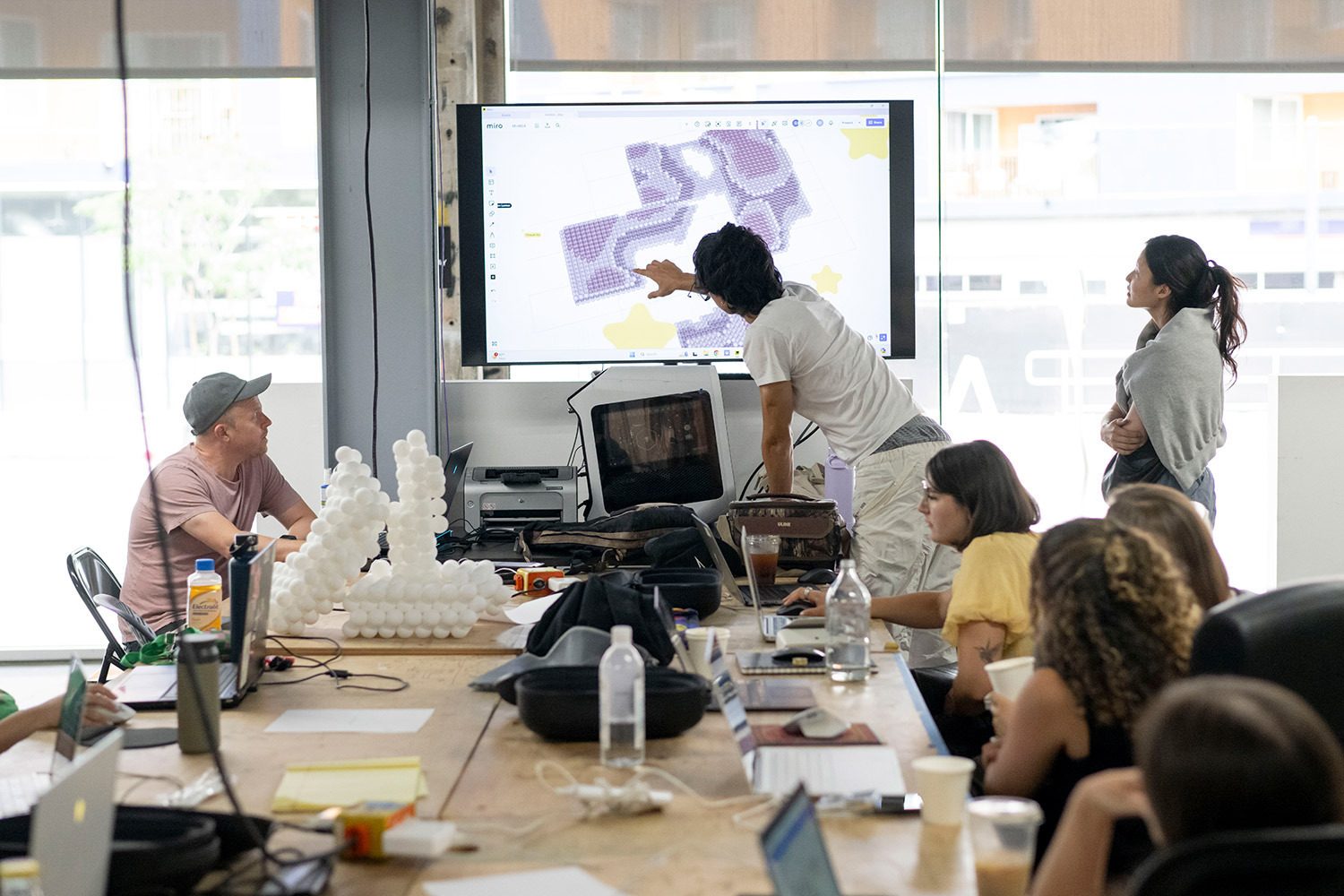
“People come from all over the world to see thesis reviews at SCI-Arc. They want to see what the future of architecture holds. And the secret is — that’s why we come too.”
Erik Ghenoiu, History + Theory Coordinator
Multicultural learning environment
Coming from a biomedical background, See initially had little exposure to global health systems. But being surrounded by classmates from different countries quickly changed that and helped her see the field through a much broader lens.
“Classroom and small group discussions were lively and interesting with diverse perspectives, especially when it comes to talking about different geographical contexts,” she says. “Studying with a multicultural cohort shifted my own biased perspectives and allowed me to learn about the gaps in other countries’ systems. In the same vein, these classmates also listen attentively when I talk about the public health (and at times, political and economic) situation in the Philippines.”
Classroom lessons were just one part of See’s MPH experience. During her internship at Fresenius Medical Care Asia-Pacific, she had the opportunity to apply what she learned in a real-world setting while working with the medical information and education team.
As part of her role, she delivered two webinars for employees — one on how dialysis is practised in Japan, and another on preventing waterborne infections in dialysis settings. She wrote a newsletter covering Hepatitis B, Hepatitis C, and COVID-19 outbreaks in dialysis centres too.
“As I have very limited professional experience, I was glad to have a taste of a corporate healthcare job, which widened my perception of career paths in the public health field,” shares See.
Real-world experience
Graduates of the MPH programme leave with a broad and practical skill set that prepares them for contemporary practice. They learn how to apply scientific evidence to real-world health challenges, how to communicate clearly on issues affecting public health, and more.
Growing into a public health professional
Learning to speak with confidence
Patricia, for example, got over her fear of public speaking. “The MPH is full of opportunities to speak up in groups of at least 15 people,” she says. Just three weeks into the programme, she was already delivering a three-minute presentation in front of her peers and professor.
During her internship, she even became comfortable delivering webinars to large audiences. “I could not have managed to do this before the MPH,” she reflects. “I will always be grateful for this unexpected personal development.”
A stronger eye for data
The MPH programme supported Patricia's growth not only as an individual, but also as a public health professional. “My time in the MPH really built my confidence in my research skills,” she shares. She has become more thorough and critical when evaluating research, especially in observational studies.
Graduates of the MPH programme leave with a broad and practical skill set that prepares them for contemporary practice. They learn how to apply scientific evidence to real-world health challenges, how to communicate clearly on issues affecting public health, and more.
Growing into a public health professional
Patricia, for example, got over her fear of public speaking. “The MPH is full of opportunities to speak up in groups of at least 15 people,” she says. Just three weeks into the programme, she was already delivering a three-minute presentation in front of her peers and professor.
During her internship, she even became comfortable delivering webinars to large audiences. “I could not have managed to do this before the MPH,” she reflects. “I will always be grateful for this unexpected personal development.”
Learning to speak with confidence
The MPH programme supported Patricia's growth not only as an individual, but also as a public health professional. “My time in the MPH really built my confidence in my research skills,” she shares. She has become more thorough and critical when evaluating research, especially in observational studies.
A stronger eye for data
Beyond research and technical skills, Patricia is now more intentional about public health communication. “The programme focuses on leveraging survey results and disease data in deciding what goes into a campaign and what strategies to use, and predicting how effective it’ll be,” she says. “Through the skills gained, I hope to design effective campaigns that not only improve human health outcomes but are also embraced by the people to be served."
Making public health messages matter
Learn more about The University of Hong Kong's MPH programme.