




Interdisciplinary, hands-on degrees
Quinnipiac University’s School of Computing and Engineering has a clear goal: transforming students into creative problem solvers poised to make a real difference as successful engineers of the 21st century.
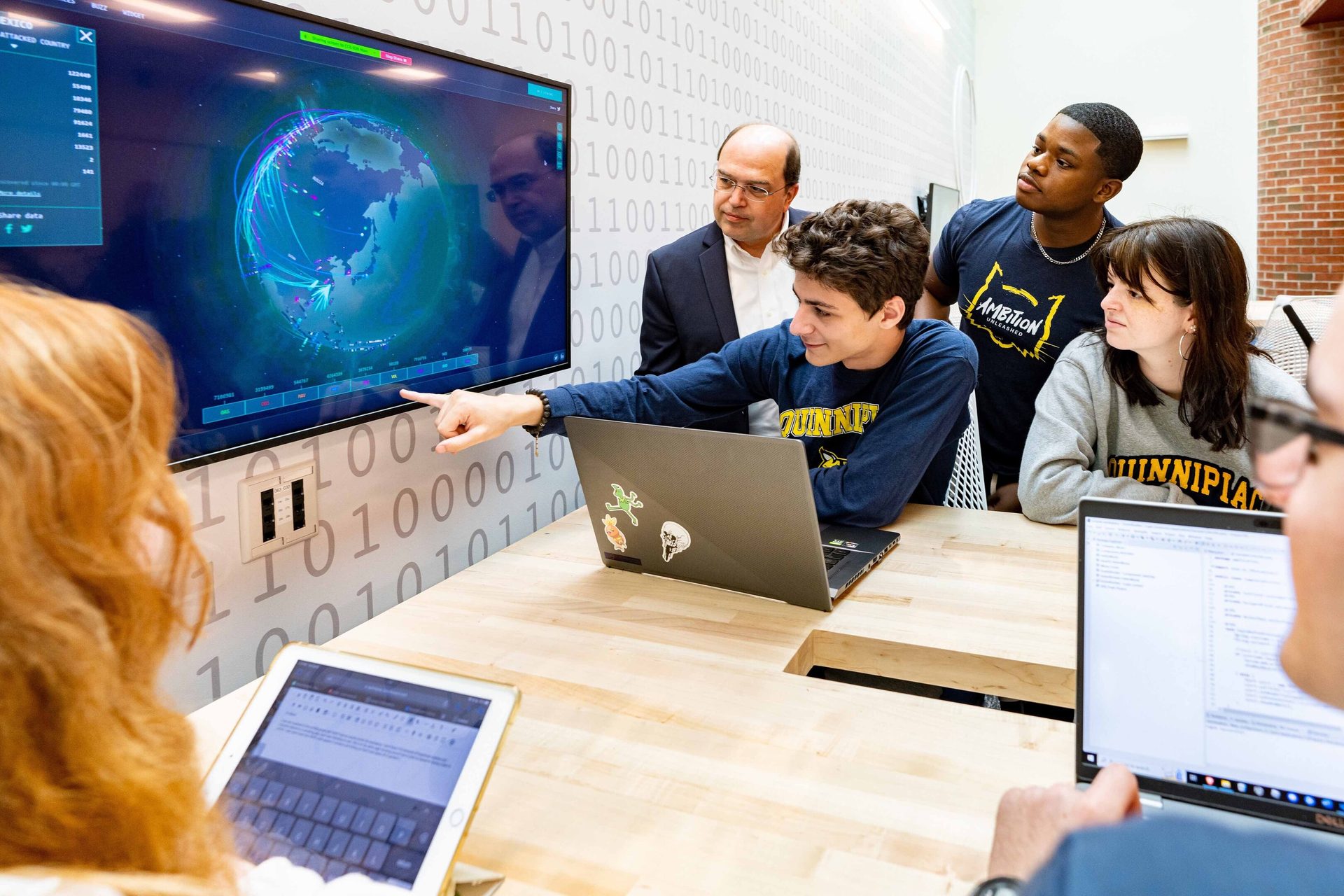
Whatever programme you choose at this private university in Hamden, Connecticut, you’ll learn by doing and from expert faculty members. Small classes are the key – a 15:1 student-to-faculty ratio — ensures you get personalised attention and support.
But the benefits of a Quinnipiac education don’t stop there – it also offers several special partnership programmes, internships with top manufacturers, and service-learning trips worldwide. As a result, students go from engineers in training to engineers in practice. The proof is in the books – 95.5% of Quinnipiac engineering graduates are employed or pursuing graduate studies within six months of graduating.

#1
university in the nation for career placement after graduation – Zippia.com
Top 200
university - US News & World Report
389
Best Colleges in the country – The Princeton Review
PART OF THE
#1
in Northeast and Islands and #18 overall in “Best for Vets: Colleges” rankings – The Military Times
Experiential, world-changing programmes
Quinnipiac’s mechanical, civil, industrial, and software engineering programmes are accredited by the Accreditation Board for Engineering and Technology or ABET, as it’s known now. This signifies that they meet the highest standards of engineering education in the country. Similarly, the BS in Computer Science programme is accredited by the Computing Accreditation Commission of ABET.

“In all of our computing programmes, we hope to instil advanced knowledge of computing skills, ethical behaviour in the profession, and a dedication to lifelong learning so that our students will always be up-to-date with new technology,” says Brian O'Neill, Interim Associate Dean and Associate Professor of Computer Science.
Projects are a big part of these programmes. Last year, two seniors developed an interface that allows people with limited mobility in their hands to operate a mouse by blinking or winking their eyes. Another team created a VR/AR space that a local healthcare provider will be using to ensure their staff is regularly recertified. “Quinnipiac University’s relationship with local companies like Hartford Healthcare have led to opportunities like the VR/AR senior project described above,” says O'Neill. “Students in the Software Engineering programme are required to have a professional development experience (typically an internship); these are highly encouraged, but not required, in Computer Science. Recently, we’ve had students do internships at companies like Salesforce and DraftKings!”
Program offerings