Partner content



Study social sciences, influence the world
Study social sciences, influence the world
In 1895, four founders of the London School of Economics and Political Science (LSE), including social reformers Beatrice and Sidney Webb, set out to prove one radical idea: society's biggest problems could be understood by knowing their causes. This founding purpose lives on as its mission today: "to know the causes of things, for the betterment of society."
More than 130 years later, this belief endures in LSE’s 40+ undergraduate degrees and 180+ graduate programmes. Each has its roots in the social sciences and explains how the world works. In fact, LSE alumni are the ones running the world. Over 40 past or present world leaders have taught or studied at LSE, and 21 Nobel laureates have passed through its doors, including 2024 economics laureates Daron Acemoglu and James Robinson.
Campus, located on Houghton Street in the centre of London, is a short walk from London’s legal heart and one of the world’s most powerful financial districts. London, itself, is the pinnacle of many other things: arts, culture, education, and more. To study at LSE is to know the causes of seemingly innumerable things, for the profound betterment of society.

21
LSE alumni or staff members have been awarded Nobel Prizes
#1
university in the UK (Times and Sunday Times Good University Guide 2025 and 2026)
Over 40
past or present world leaders have taught or studied at LSE

IBM and Columbia University are partnering to make data centres more energy-efficient, as these facilities consume around 2% of U.S. energy supplies according to the Department of Energy. They are modelling AI's energy use, designing low-power chips, reducing software inefficiencies, and optimising system operations to address this issue.

V. Faye McNeill, professor of chemical engineering, is working with partners across the Global South to expand air quality monitoring in India, generate new air pollution data in Africa, and build local capacity in air quality science. The team’s success has led to informed policy decisions and improved air management across various regions.
#1
top university in the UK (The Times) and University of the Year 2025 (Sunday Times)
20
Nobel Prize winners among LSE staff and alumni
8
SPP degree programmes designed for entry level to executive stage professionals
69
nationalities - represented in current cohort of 391 students
Six departments, one research-led gold standard
Department of Anthropology
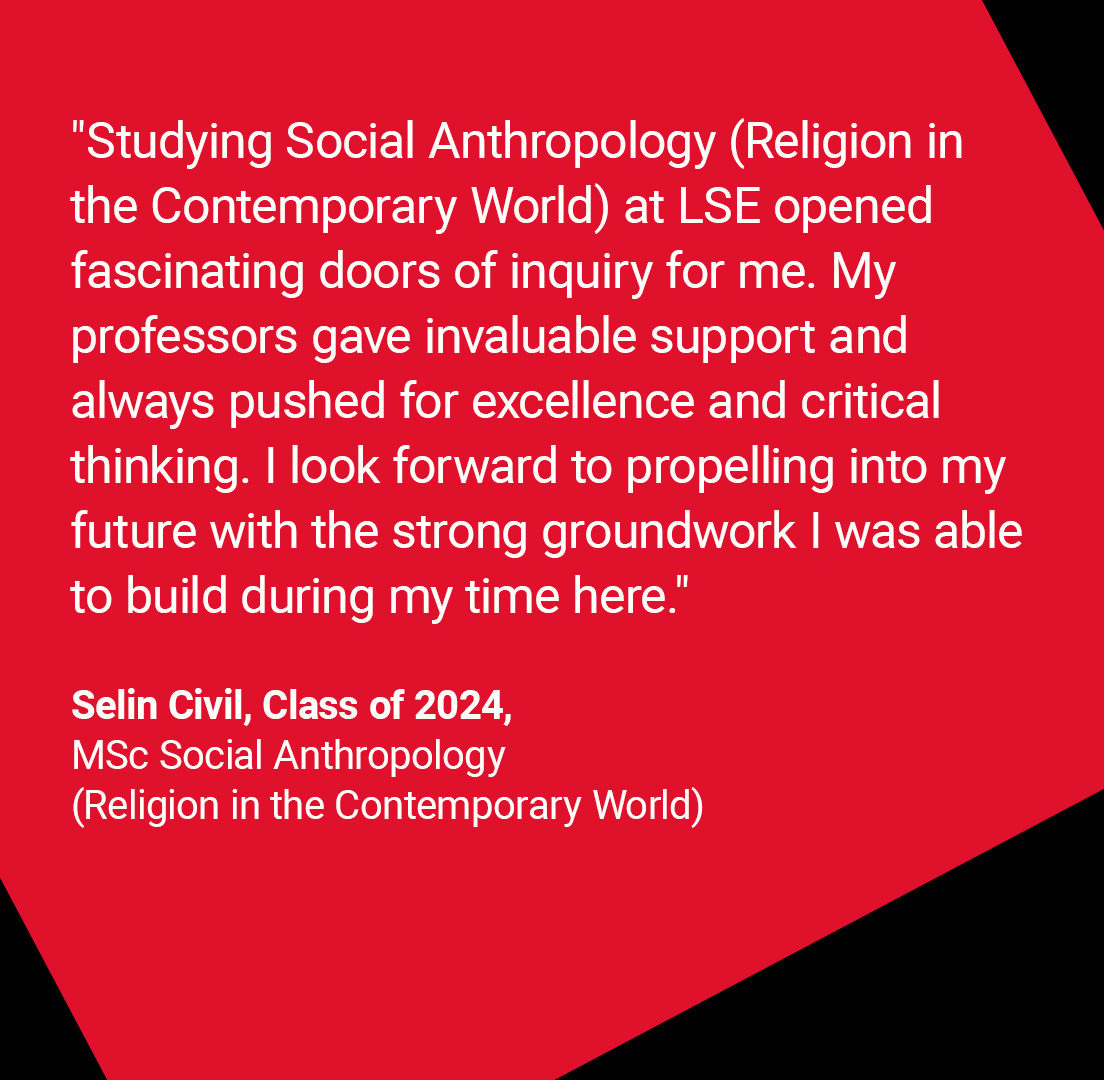
At the Department of Anthropology, you'll trace how power moves through kinship and resistance – guided by researchers who've done fieldwork with rural and urban communities, activists, and religious movements across every region of the world. Every assumption you carry gets tested against lived evidence, generation after generation.
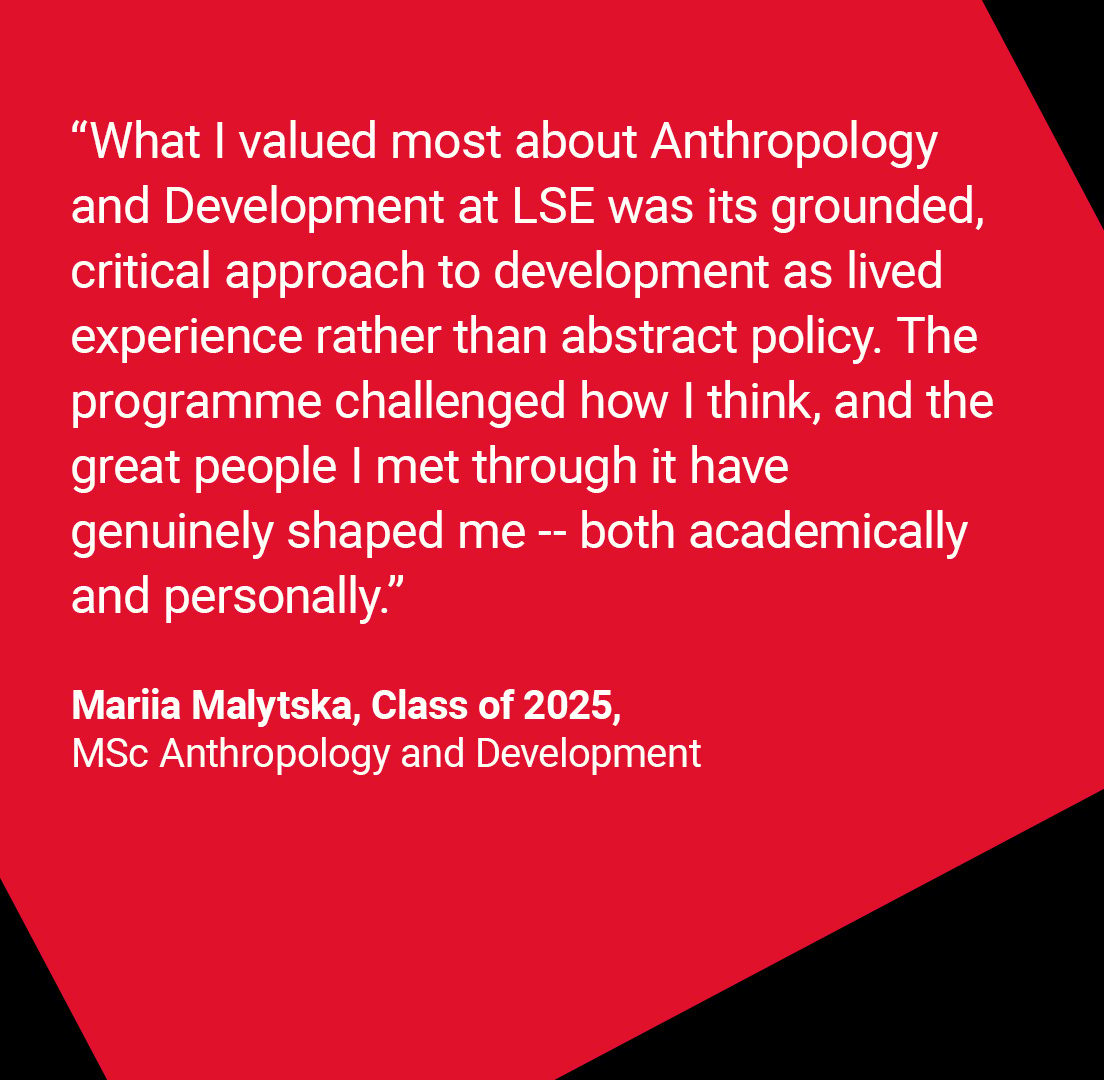
That rigour has earned LSE the UK's #1 spot for Anthropology in the Complete University Guide 2027. Undergraduate options include BA Social Anthropology and BA Anthropology and Law. At the graduate level, you can pursue MSc Anthropology and Development or MSc Culture, Justice and Environment.
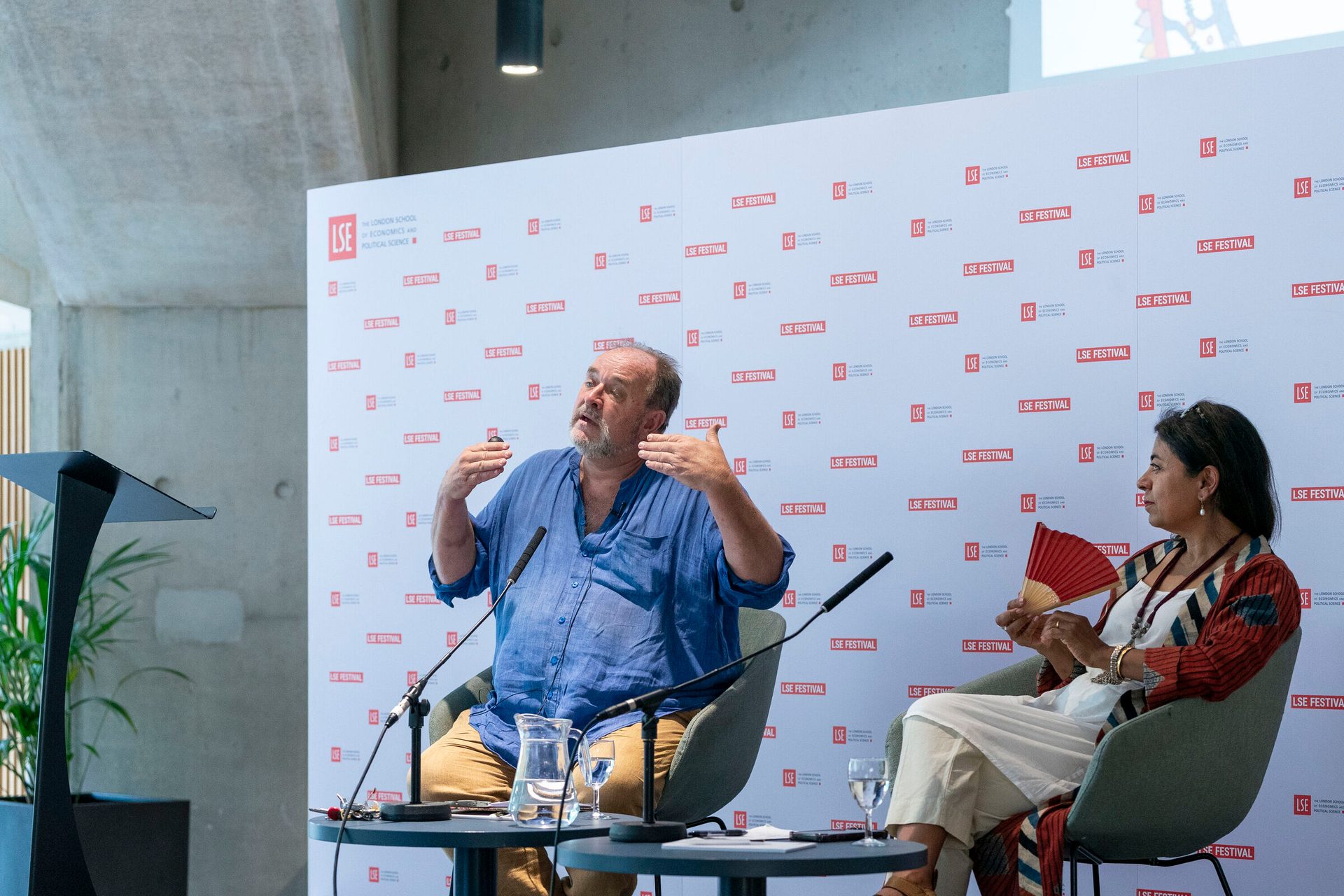
Department of Gender Studies
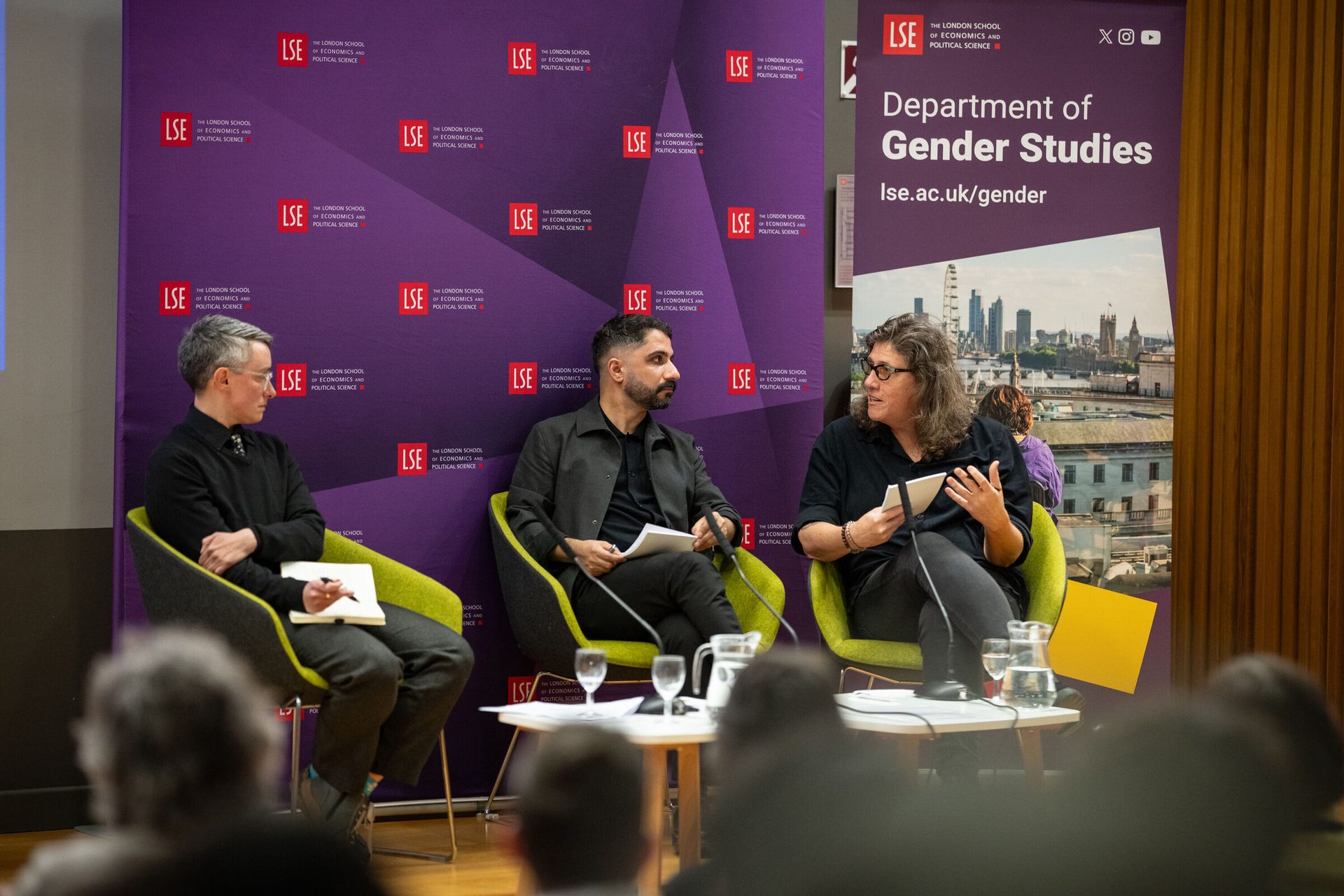
Founded by scholars who were told gender studies had "no place at a university," LSE Gender grew into the largest Department of Gender Studies in Europe. Its research tracks how gender, power, and inequality cross borders and cultures. Around 150 students sign up yearly to pursue its eight master's programmes, pairing feminist theory with real-world research. Choose from MSc Gender (Sexuality), MSc Gender (Rights and Human Rights), MSc Gender, Peace and Security, or MSc Gender, Policy and Inequalities, and many more.
Department of Health Policy
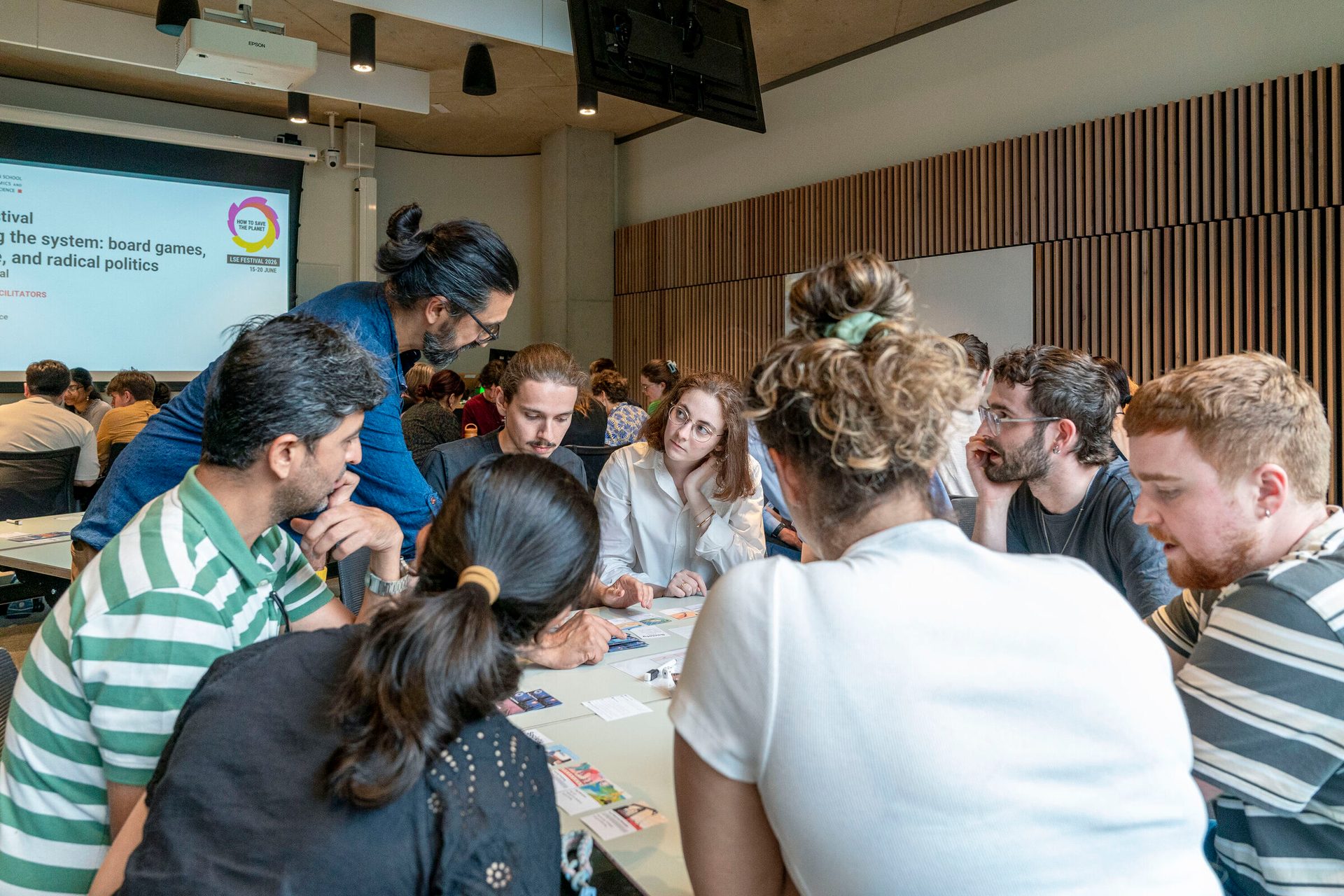
If you're passionate about health systems and the social and political forces shaping them, the Department of Health Policy sharpens that interest into real expertise with LSE ranked #1 in the UK in the Complete University Guide 2027 for Social Policy. That strength runs through every programme on offer. MSc Global Health Policy and MSc Health Data Science sharpen your skills in data analysis and policy design at the postgraduate level.
Department of Sociology
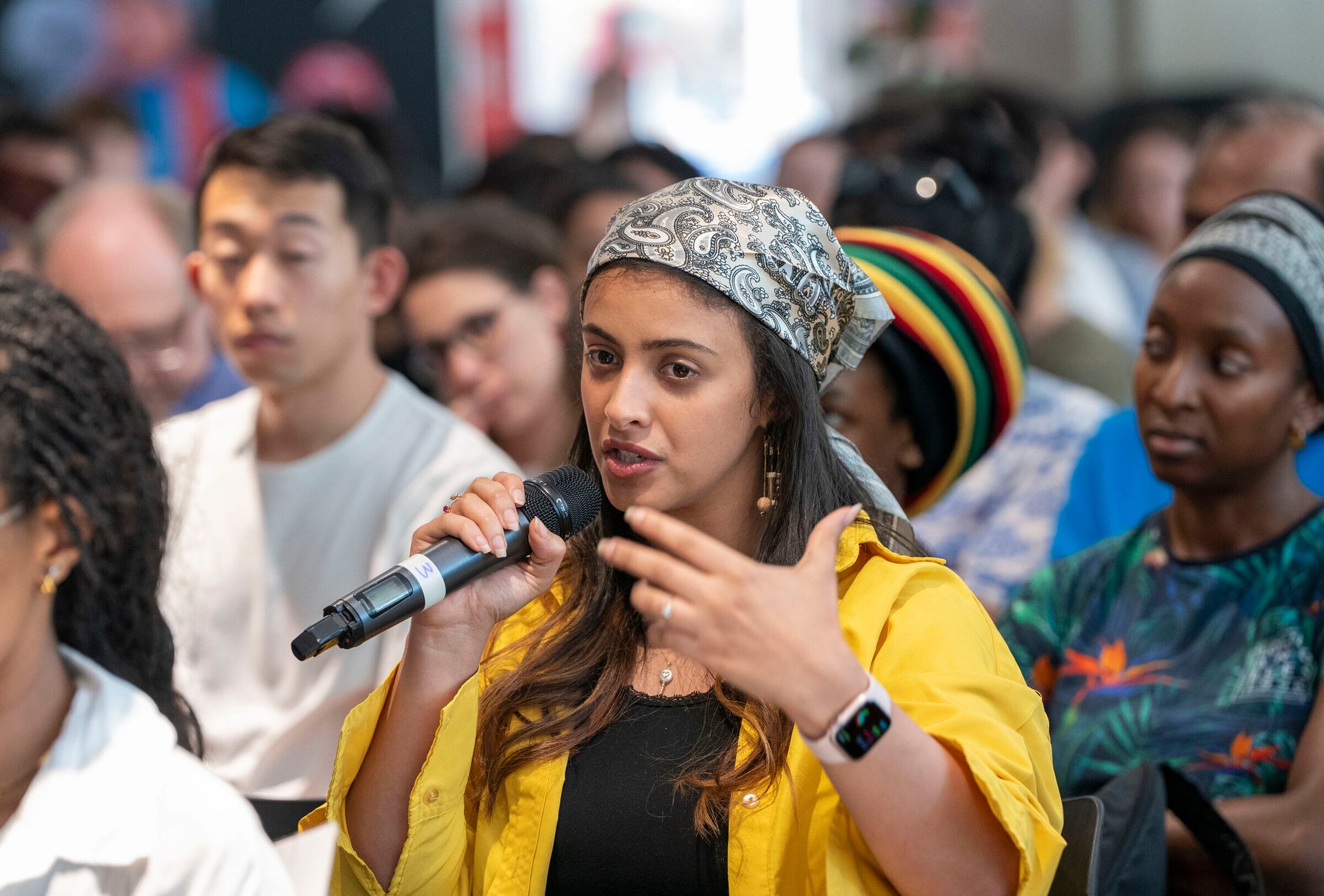
Founded in 1904 as the UK's first sociology department, LSE Sociology now ranks first in the UK in The Guardian University Guide 2026 and first in London in the Complete University Guide 2027 and first in London in the Complete University Guide 2027. Its research spans economic sociology, politics and human rights, social inequalities, and urban sociology. There are 10 undergraduate and postgraduate programmes offered, including BSc Sociology, MSc Sociology, MSc Political Sociology, MSc Human Rights, and MSc Economy and Society.
Department of International History
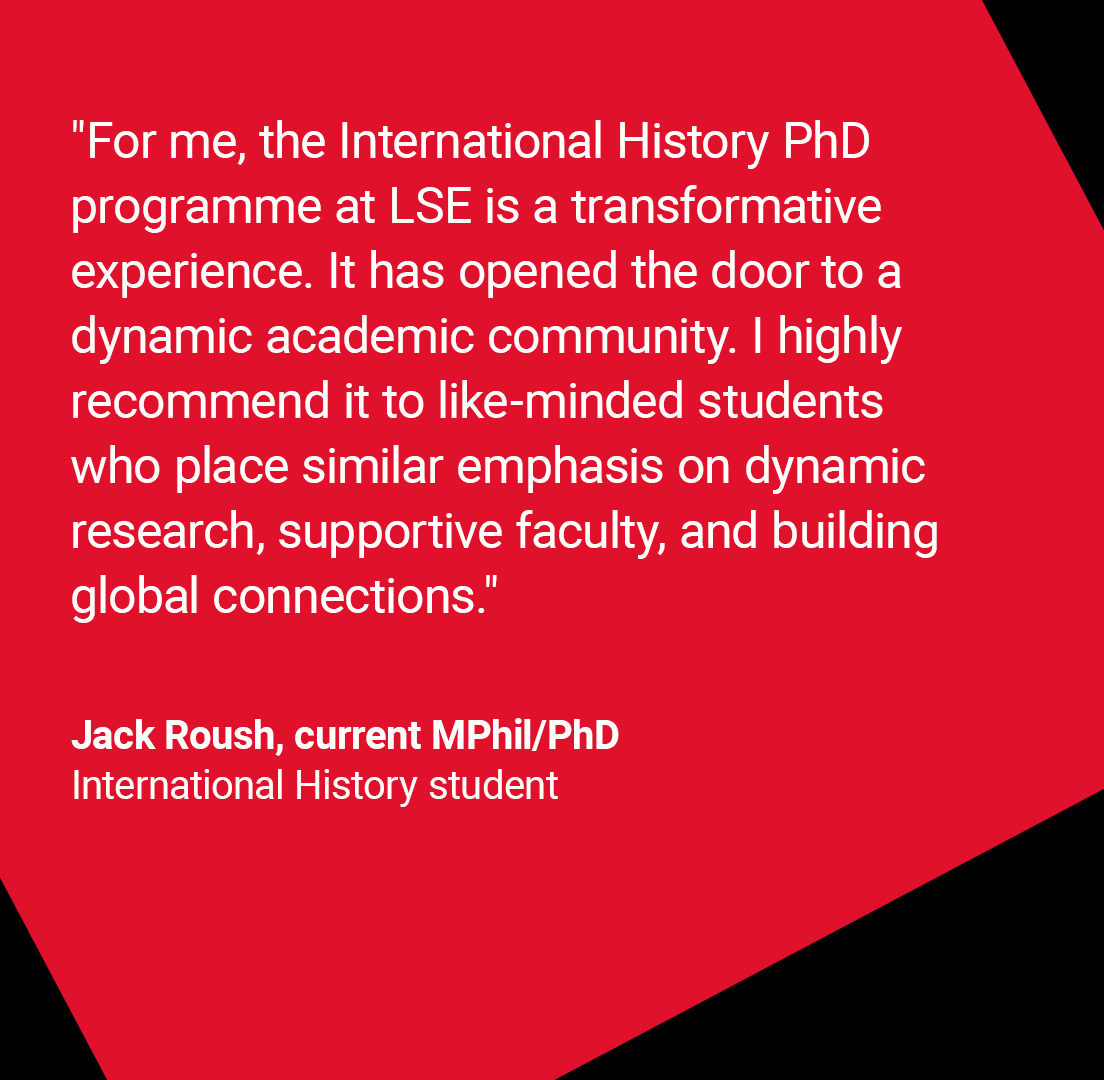
The department traces back to the Stevenson Chair of International History, endowed in 1926 to teach history "internationally and as far as practicable" beyond national borders. The success of its mission is clear for all to see in its recent rankings: 10th in the world for History in the QS World University Rankings 2026, and 1st in the UK in the Complete University Guide 2027. Research runs through the Cold War Studies Project and the Iranian History Initiative, feeding directly into teaching. Undergraduates study BA History while graduates can choose MSc programmes including MSc History of International Relations and MSc Empires, Colonialism and Globalisation, double master's degrees or MPhil/PhD International History.
Department of Geography and Environment
Geography has been taught at LSE since its very first lectures in 1895, making the Department of Geography and Environment one of the school's founding disciplines. That 130-year foundation now holds second place globally for Geography in the QS World University Rankings by Subject 2026.
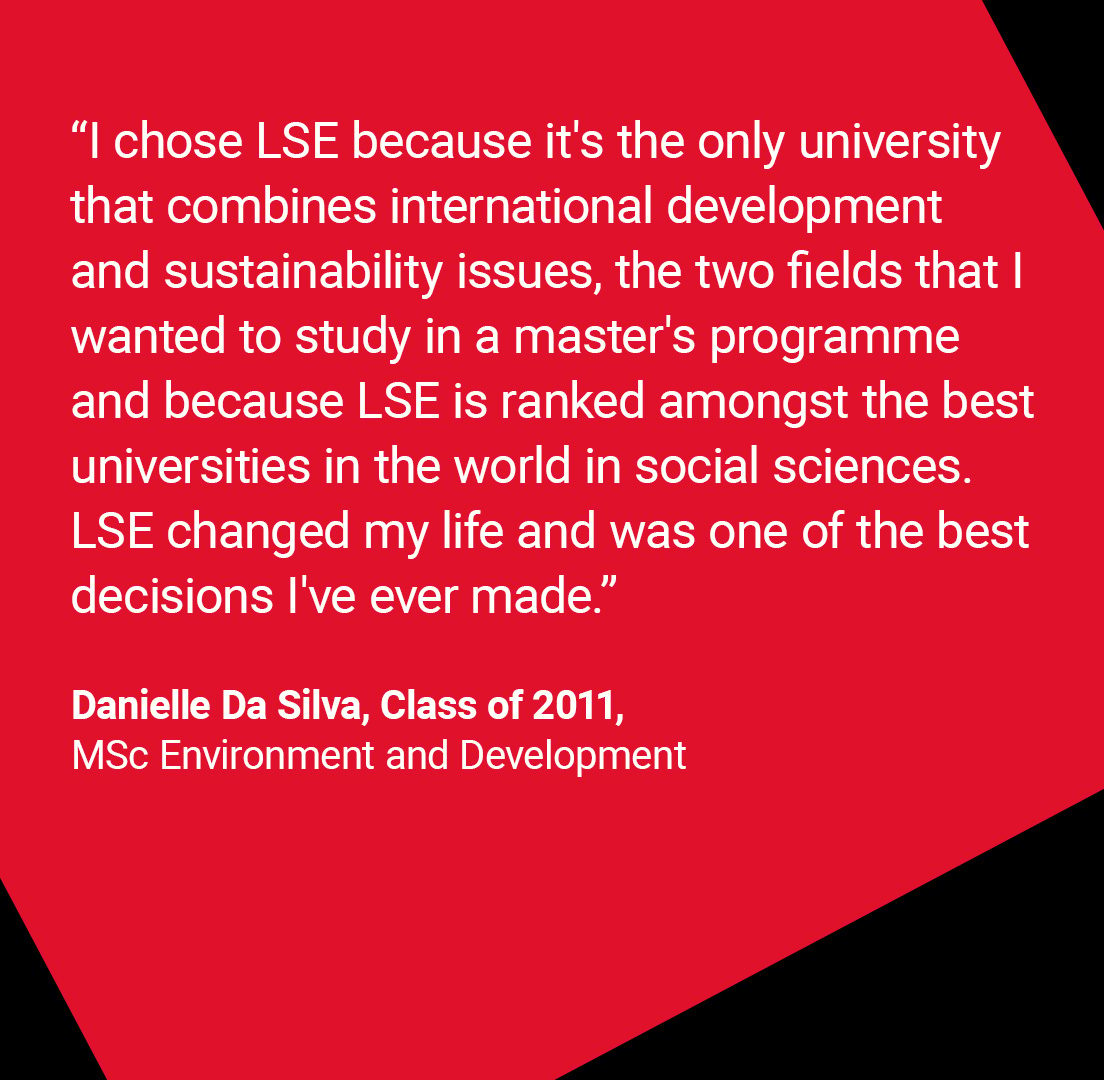
Its research focuses on economic and urban geography, urban planning, environmental social science, and climate change, all grounded in real-world applications. Five undergraduate programmes cover the core discipline. Ten postgraduate options go deeper, from MSc Environment and Development and MSc Regional and Urban Planning Studies through to MSc Environmental Policy and Regulation, and MSc Local Economic Development.
Hear from the graduates
Hear from the graduates


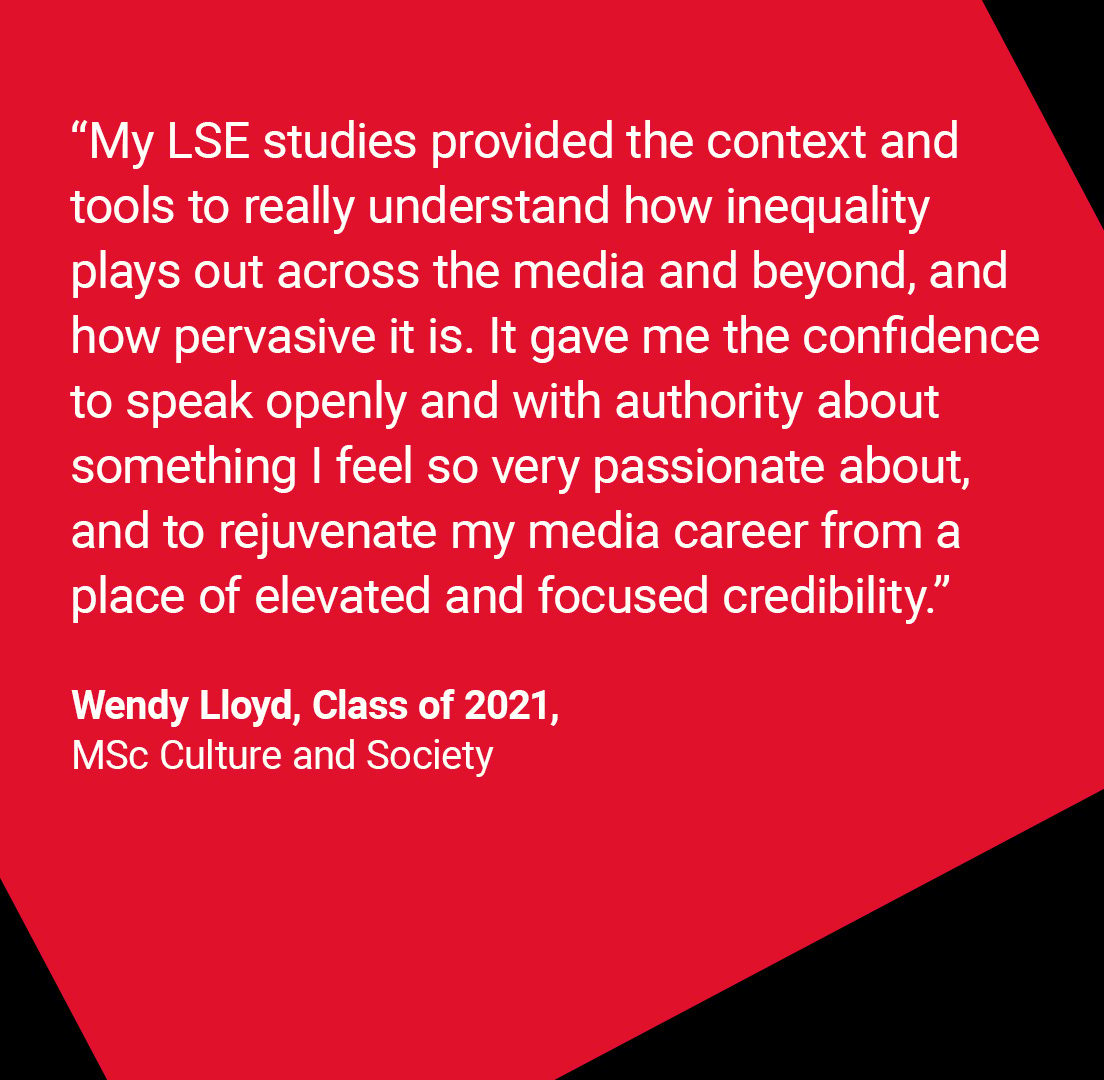
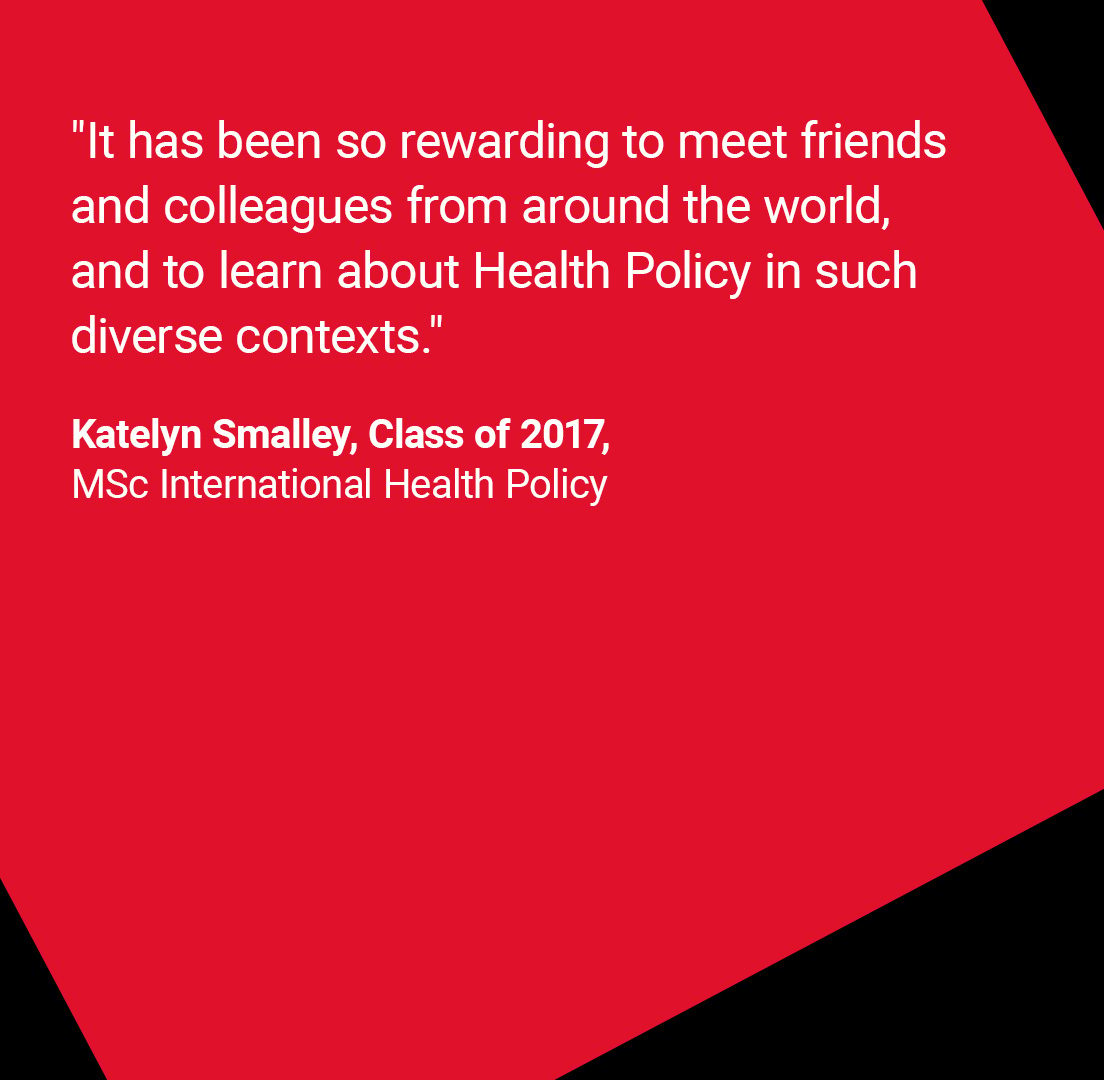
Our Global Student Community
Our Global Student Community

Our Global Student Community
Hear from the students
I’m working with financial institutions and policymakers to help them make better investments and shape evidence-based policy decisions for our economies to transition towards sustainability. I wouldn’t have built the sort of critical thinking and tools required to make changes happen in the field of climate and environmental issues without the MPA and the people I met there.
Helene Procoudine-Gorsky
Master of Public Administration, ‘18
This fast-paced programme equipped me with analytical frameworks, toolkits, and most importantly, confidence that can be useful in designing meaningful initiatives in the public sector. I also gained a clear view on what evidenced-based policy is and learnt practical applications of advanced tools.
Salman Sabbab
Master of Public Policy, ‘23
A campus designed for impact
My long-term goal is to become a subject matter expert in supply chain, which is the backbone of the industry. I found BGSU's Logistics Systems Engineering program is a combination of engineering and management, which helps me to enhance my knowledge and skills. I joined BGSU in January 2022 and got the opportunity to work as a Graduate Assistant on an industrial project under the guidance of Dr. Sarder.
Swati Arora, India
MS in Logistics Systems Engineering



Hear from the students
An empowering education awaits at the London School of Economics and Political Science.
Copyright © 2026 Study International, official representative of London School of Economics