Of the three forces reshaping organisations identified in McKinsey & Company's The State of Organisations 2026 report, it’s the infusion of AI into automation and analytics that is arguably the most transformative. Significant benefits await including productivity gains, faster speed to market, and cost reductions but only if an organisation has the data experts to harness AI’s potential.
“Employers are increasingly seeking graduates who can analyse complex datasets, identify meaningful patterns, communicate findings effectively, and support evidence-based decisions,” says Geoffrey Mather, Head of the School of Computing at the Eastern Institute of Technology (EIT) in New Zealand. “And while AI tools can automate aspects of analysis, organisations still need professionals who understand data quality, context, interpretation, ethics, and governance.”
Recognising this growing demand, EIT has developed a new suite of postgraduate programmes in Applied Data Analytics.

The Eastern Institute of Technology’s advantage in Applied Data Analytics

IBM and Columbia University are partnering to make data centres more energy-efficient, as these facilities consume around 2% of U.S. energy supplies according to the Department of Energy. They are modelling AI's energy use, designing low-power chips, reducing software inefficiencies, and optimising system operations to address this issue.

V. Faye McNeill, professor of chemical engineering, is working with partners across the Global South to expand air quality monitoring in India, generate new air pollution data in Africa, and build local capacity in air quality science. The team’s success has led to informed policy decisions and improved air management across various regions.
If you're ready to advance your analytical skills but don’t want to commit to a full master's degree, this postgraduate diploma is for you. It covers data analysis, visualisation, business intelligence, data management, and analytical problem-solving.
Postgraduate Diploma in Applied Data Analytics
“The postgraduate diploma gives you a meaningful qualification while allowing you to build confidence, test your interest, and develop a strong foundation,” shares Dr. Noor Alani, Programme Leader at the School of Computing. “If your goals later expand towards advanced professional practice, research or leadership, you’ll have a pathway into EIT’s master’s degree.”

The Master of Applied Data Analytics is ideal for professionals looking to move into more strategic and leadership-focused roles. Combining advanced analytics with independent research, industry projects, and applied investigations, you'll graduate with the expertise to apply ethical and responsible data practices and lead decision-making with confidence.
Master of Applied Data Analytics

A campus designed for impact
A different approach to data analytics
From data to better decisions
Technical expertise alone doesn't make a great data analyst. According to Dr. Alani, the real value comes from knowing which questions to ask, including: What problem are we actually solving? Is the available data suitable? Who will be affected by the result? How should the findings be communicated?

“That is why we train graduates to move confidently between statistical theory, computational skills, and real-world application,” he says. “Employers need people who can produce, explain, and defend results, and recognise when the evidence is not strong enough to support a decision.”
Learning connects with industry
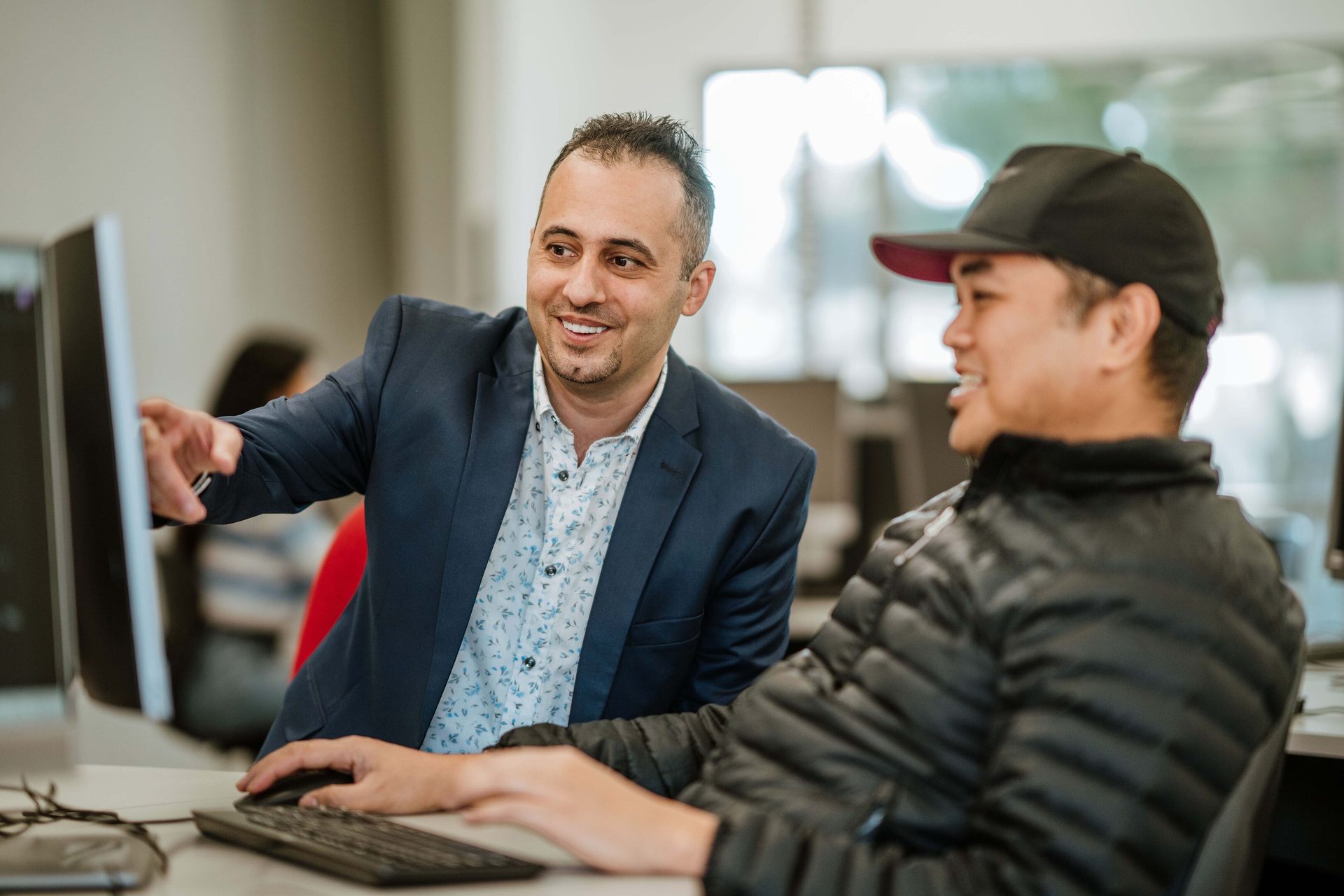
Applied learning is a big part of what makes EIT's postgraduate programmes in Applied Data Analytics different. “Data analytics is ultimately a practice-oriented discipline. Organisations don't hire analysts simply to run algorithms; they hire them to solve problems, create insights, and support better decisions. The closer students can get to authentic industry experiences during their studies, the better prepared they’ll be to make an immediate contribution after graduation,” shares Mather.
Applied projects and industry-integrated learning bridge the gap between academic study and professional practice. You'll gain the skills to define business needs, manage data quality, engage with stakeholders, and communicate evidence-based recommendations.
A transcript tells employers what you've learned. A portfolio tells the story behind those skills. Every applied project gives you a real example to talk about, including what the challenge was, how you approached it, and the impact your work made.
It's one thing to know the tools. It's another to work with a team, manage a project, and explain your ideas to different audiences. Through industry-integrated learning, you’ll develop these professional skills while tackling real-world challenges.
Opportunity backed by care
The variety of opportunities at Leweston means every student has the chance to uncover new talents and passions. No matter where they begin, they’re backed by all-round support.
Where everyone belongs
International students are given a warm welcome with language support, cultural integration, and a structured settling-in programme. After that, the celebrations continue all year round, with Language Week, a Christmas Market, international evenings, and multicultural community events.
Leweston’s Catholic values are at the heart of the school, shaping a culture built on community, responsibility, and dignity. Families from all faiths feel comfortable here.
A home away from home
t Leweston, the international student community is intentionally small. Boarders and day pupils mix naturally, rather than sticking to their own circles. It also means every student is truly known, with houseparents (many of whom were boarders themselves) on hand to help new students settle in quickly.
Opportunity backed by care
The variety of opportunities at Leweston means every student has the chance to uncover new talents and passions. No matter where they begin, they’re backed by all-round support.
A home away from home
At Leweston, the international student community is intentionally small. Boarders and day pupils mix naturally, rather than sticking to their own circles. It also means every student is truly known, with houseparents (many of whom were boarders themselves) on hand to help new students settle in quickly.
Where everyone belongs
International students are given a warm welcome with language support, cultural integration, and a structured settling-in programme. After that, the celebrations continue all year round, with Language Week, a Christmas Market, international evenings, and multicultural community events.
Leweston’s Catholic values are at the heart of the school, shaping a culture built on community, responsibility, and dignity. Families from all faiths feel comfortable here.
Out with the old
SCI-Arc relocated several times — from Santa Monica to Marina del Rey, to Beethoven Street, and finally to downtown Los Angeles. Each move was both logistical and symbolic. “Moving to the Arts District was a big deal, and a bold move,” said Kevin McMahon, who’s worked at the school since 1987. “It was the right thing to do.”
The shifting geography of the school mirrored its belief in transformation. “This place is a chameleon,” said International Advisor Lisa Russo, who joined in 1986. “Just when you’re getting comfortable, you’ve got to get comfortable in a different way.”
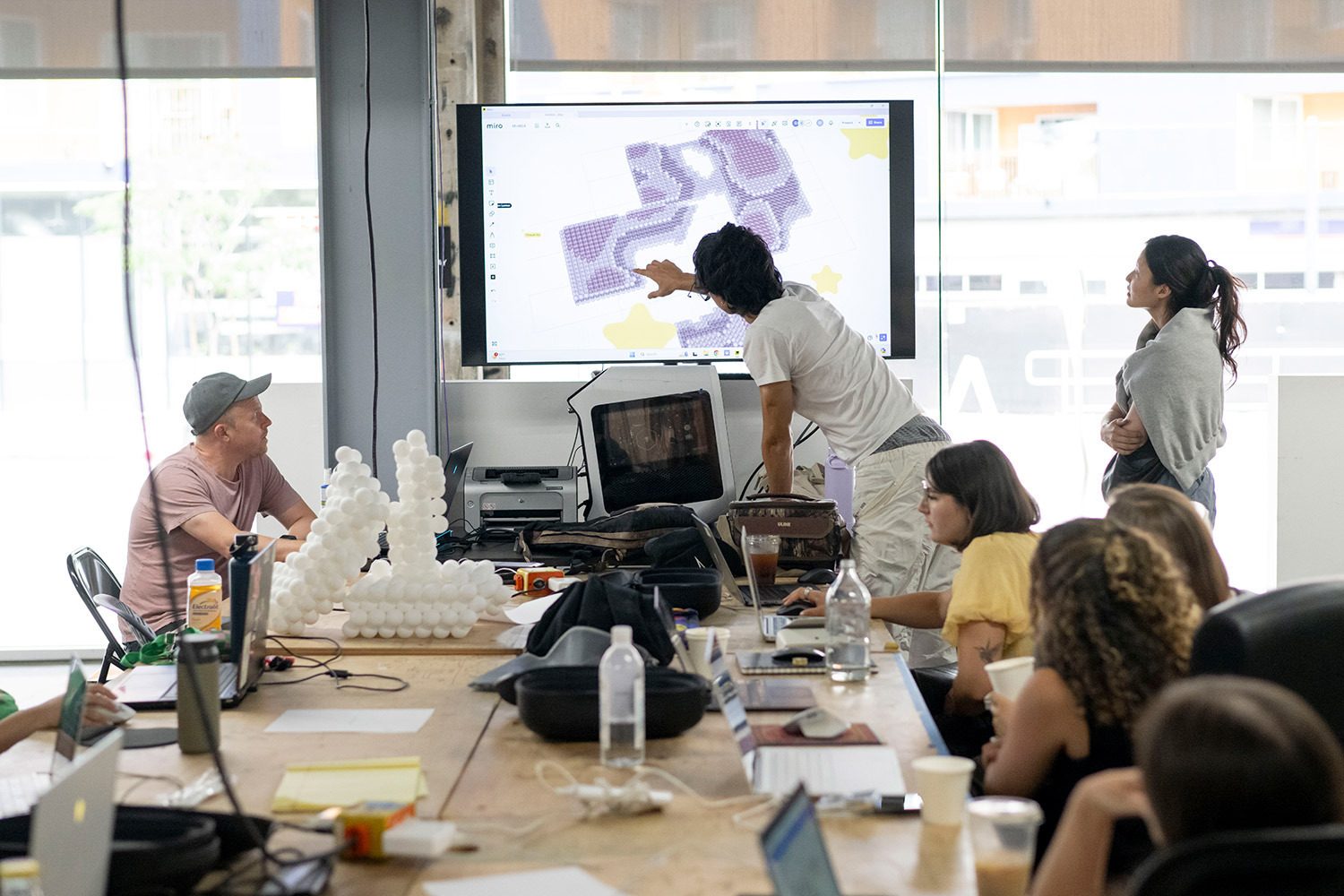
This is why the architect, in SCI-Arc’s conception, is a connector: a synthesizer of form, systems, politics, science, and culture. Across physical installations, speculative fiction, urban reuse, and artificial intelligence, students’ thesis work reaffirms this.


“People come from all over the world to see thesis reviews at SCI-Arc. They want to see what the future of architecture holds. And the secret is — that’s why we come too.”
Erik Ghenoiu, History + Theory Coordinator
Your experience is your advantage
You don't need a computer science degree to build a career in data analytics. If you’ve completed a bachelor’s degree in a field with a quantitative focus, such as engineering, economics, finance, mathematics, or the sciences, chances are you already have many of the skills that data analytics demands.
EIT's Applied Data Analytics programmes simply help you connect that expertise with modern data tools, analytical techniques, and industry practices.
“The applied and project-based nature of the programme also helps students make this transition,” adds Mather. “Rather than working solely with theoretical examples, students have opportunities to solve authentic problems, analyse real datasets, and apply analytics within contexts that are relevant to their professional interests. This makes it easier for them to see how their previous knowledge and experience can be leveraged in a data-driven role.”

Learn once. Apply for life.
Rather than revolving the curriculum around a single programming language or software library, EIT's Applied Data Analytics programmes focus on skills that last, including problem formulation, statistical reasoning, data engineering, critical evaluation, communication, and responsible decision-making.
“This ability to learn, test, and adapt is more valuable than memorising one piece of software,” explains Dr. Alani. “R, Python, and analytical platforms will continue to evolve, but the ability to ask a good question, examine the evidence and explain a defensible conclusion will remain important.”
Data with integrity
EIT has a long-standing commitment to supporting industry and community development across New Zealand, and its Applied Data Analytics programmes reflect that same philosophy.
The result is a new generation of data professionals who can support organisations while bringing skills that translate across industries and borders.

The future looks bright for applied data analytics graduates. Data is becoming part of almost every role and organisation, from business, healthcare, and education to government, agriculture, and finance. And with EIT's Applied Data Analytics programmes, you’ll graduate ready for them.
A world of opportunities

“While students learn contemporary analytical tools and techniques, they also develop the critical thinking, communication, ethical awareness, and problem-solving skills that organisations are seeking in the age of AI,” says Mather. “We are focused on preparing graduates not just for today's jobs, but for careers that will continue to evolve over the coming decade.
Take the next step towards a data-driven career with Eastern Institute of Technology.