Partner content


Bold research that takes you to the Arctic and beyond
From tougher hydrogen sensors to electrical therapies for spinal injuries, Chalmers University of Technology is focused on its “World in Progress” vision: fixing the world, one discovery at a time. Students come ready to question, experiment, and contribute.
Like Svea Strassburger from Germany and Sara Nanetti from Italy. These two students are chasing different questions but driven by the same instinct: to make science matter.
Svea is pursuing a Physics, MSc, while Sara is completing an Industrial ecology, MSc. “I wanted to study pure physics but next to theoretical physics I was also looking for more engineering applications,” says Svea. “That’s the beauty of Chalmers -- they’re an engineering school. They offer a lot of interdisciplinary courses that connect the theoretical world of physics with engineering physics, which is not necessarily typical in common physics degrees in Germany.”
Sara had a different dilemma: choosing between environmental science and the social-science side of sustainability. At Chalmers, she didn’t need to choose just one. Industrial Ecology lets her live in both worlds -- engineering and sustainability.
students
10,999
publications per year
3,031
staff
3,235
new doctoral students
240
Cutting-edge research and projects
Cutting-edge research and projects
Chalmers’s research ecosystem spans 13 departments and results in around 3,000 scientific articles published each year. Projects cut across fields -- such as energy, health engineering, nanoscience and quantum technology, earth, space, and more. Every one of them contributes to building a more sustainable future, in Sweden and abroad.
This is an environment that makes things happen. For example, the “Digital Health Implementation” course, in collaboration with the Stanford Mussallem Centre for Biodesign, trains students to develop digital health solutions.
Students build online tools, such as mobile apps that extend healthcare beyond hospitals and bedsides. The problems they had to tackle were rooted in real-world scenarios, unlike the more theoretical ones in Svea’s physics bachelor’s. Here, at Chalmers, they were real, they were tangible, and they opened new doors.
Svea’s group project even won first prize in a competition, earning them a funded study trip to Stanford. “We joined different fairs and workshops, and presented our app at the Nordic Innovation House, which is a great institution in the Bay Area,” she says. “The Stanford Mussallem Center for Biodesign is where I’m writing my master’s thesis right now: ‘Modeling Behavioral Change Under Digital Interventions using Complex-Systems Approaches’.”
“It connects medical staff from Sahlgrenska University Hospital, a large hospital in Gothenburg, with students. Each doctor offers a daily problem which a group of students tries to solve.”

Svea Strassburger
Cutting-edge research and projects
Chalmers’s research ecosystem spans 13 departments and results in around 3,000 scientific articles published each year. Projects cut across fields -- such as energy, health engineering, nanoscience and quantum technology, earth, space, and more. Every one of them contributes to building a more sustainable future, in Sweden and abroad.
This is an environment that makes things happen. For example, the “Digital Health Implementation” course, in collaboration with the Stanford Mussallem Centre for Biodesign, trains students to develop digital health solutions.
Students build online tools, such as mobile apps that extend healthcare beyond hospitals and bedsides. The problems they had to tackle were rooted in real-world scenarios, unlike the more theoretical ones in Svea’s physics bachelor’s. Here, at Chalmers, they were real, they were tangible, and they opened new doors.
Svea’s group project even won first prize in a competition, earning them a funded study trip to Stanford. “We joined different fairs and workshops, and presented our app at the Nordic Innovation House, which is a great institution in the Bay Area,” she says. “The Stanford Mussallem Center for Biodesign is where I’m writing my master’s thesis right now: ‘Modeling Behavioral Change Under Digital Interventions using Complex-Systems Approaches’.”
“It connects medical staff from Sahlgrenska University Hospital, a large hospital in Gothenburg, with students. Each doctor offers a daily problem which a group of students tries to solve.”
Svea Strassburger
Figuring out systems, together, daily
Industrial Ecology at Chalmers is about understanding how climate and environmental impacts emerge from the world’s material and energy systems. Designing better ones is the goal of the two-year programme. Sara is applying this perspective in her master’s thesis in Tanzania, where she focuses on sustainable cement production and building practices across the country to help communities invest in local, cheaper, and less polluting materials.
“When you work in a group, you have to divide tasks among each other,” she says. “You need to maintain an overview of the whole scientific project while being specialized in your specific field. I think this is a very important skill — being able to focus on your own research while still keeping up with the progress of others.”
Sara Nanetti
Cross-disciplinary learning at its best
The Physics, MSc programme moves between theory, computation, and hands-on experimentation, giving Svea the range to tackle problems that don’t fit neatly into a single discipline.
Not that she wants them to.
She and Sara are both huge fans of the university’s Tracks courses, which are hands-on, interdisciplinary experiences, usually carried out in groups, that allow students to explore new fields. “It could be about any kind of topic, any kind of field, and they’re open to everyone. You get people from all kinds of programmes, as well as externals, postgraduates, and PhD students.” she says.
That’s one of the best parts of Chalmers, Svea notes: flexibility. “You have core courses you have to complete, complementary courses you have to take -- but then you have a lot of freedom in shaping your education,” she says. “I really believe that by now, we have become good scientists and researchers because we were able to follow our passion.”
Figuring out systems, together, daily
Industrial Ecology at Chalmers is about understanding how climate and environmental impacts emerge from the world’s material and energy systems. Designing better ones is the goal of the two-year programme. Sara is applying this perspective in her master’s thesis in Tanzania, where she focuses on sustainable cement production and building practices across the country to help communities invest in local, cheaper, and less polluting materials.
“When you work in a group, you have to divide tasks among each other,” she says. “You need to maintain an overview of the whole scientific project while being specialized in your specific field. I think this is a very important skill — being able to focus on your own research while still keeping up with the progress of others.”
Sara Nanetti
Cross-disciplinary learning at its best
The Physics, MSc programme moves between theory, computation, and hands‑on experimentation, giving Svea the range to tackle problems that don’t fit neatly into a single discipline. Not that she wants them to.
She and Sara are both huge fans of the university’s Tracks courses, which are hands-on, interdisciplinary experiences, usually carried out in groups, that allow students to explore new fields. “It could be about any kind of topic, any kind of field, and they’re open to everyone. You get people from all kinds of programmes, as well as externals, postgraduates, and PhD students.” she says.
That’s one of the best parts of Chalmers, Svea notes: flexibility. “You have core courses you have to complete, complementary courses you have to take -- but then you have a lot of freedom in shaping your education,” she says. “I really believe that by now, we have become good scientists and researchers because we were able to follow our passion.”
Chalmers’s dynamic environment empowers students to explore new opportunities, just like Svea and Sara did. They can complete an internship abroad with established companies, go on exchange through Erasmus+, or pursue a short mobility programme which combines online study with a shorter physical stay.
At Chalmers, Svea got to study abroad in Mexico, having already done so in India during her bachelor’s degree.
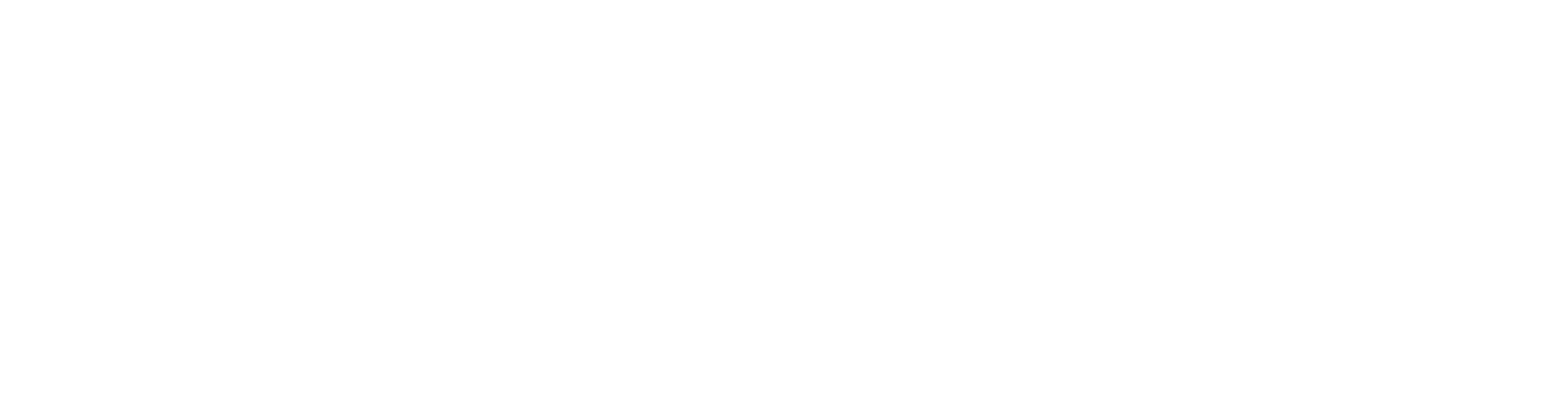
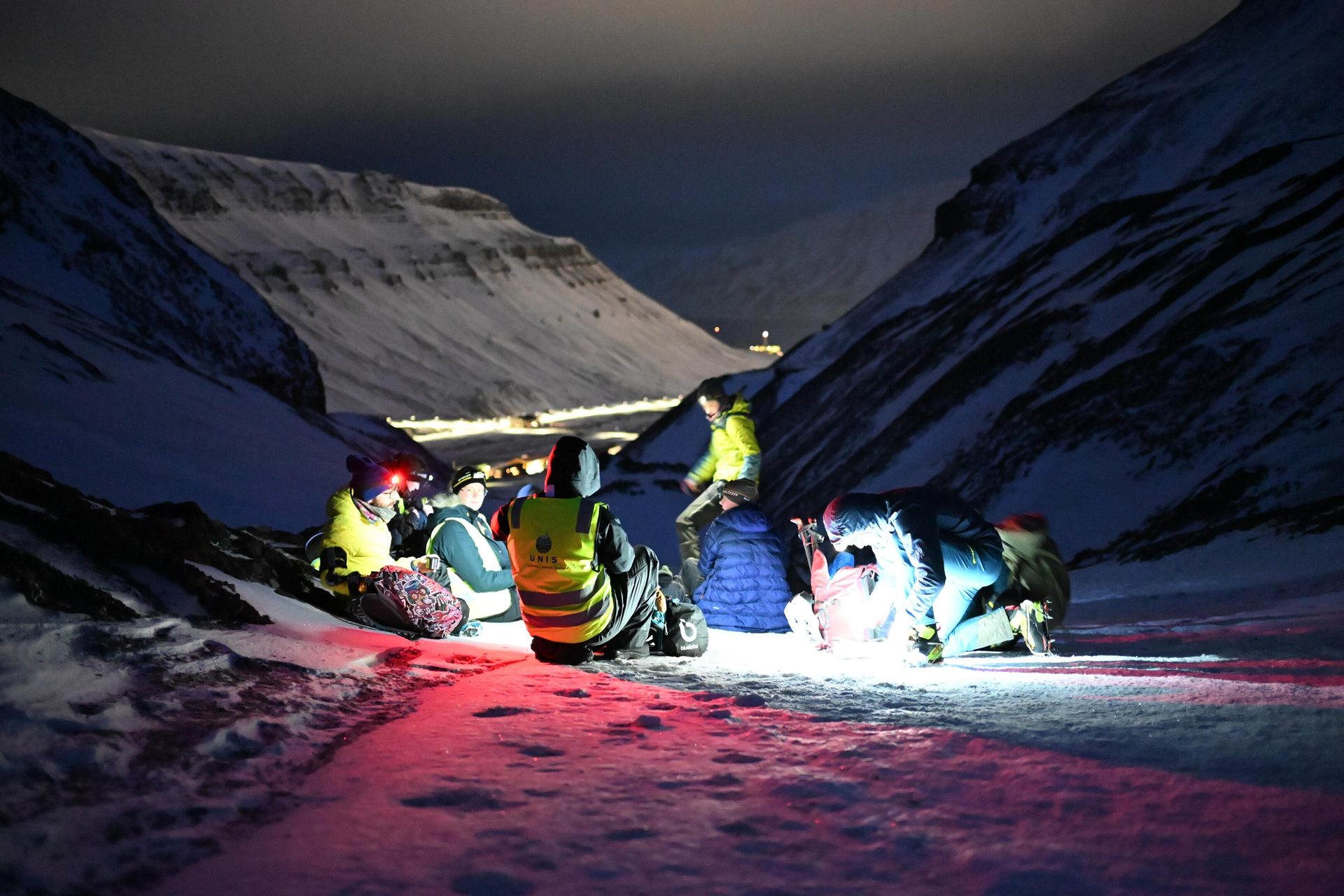
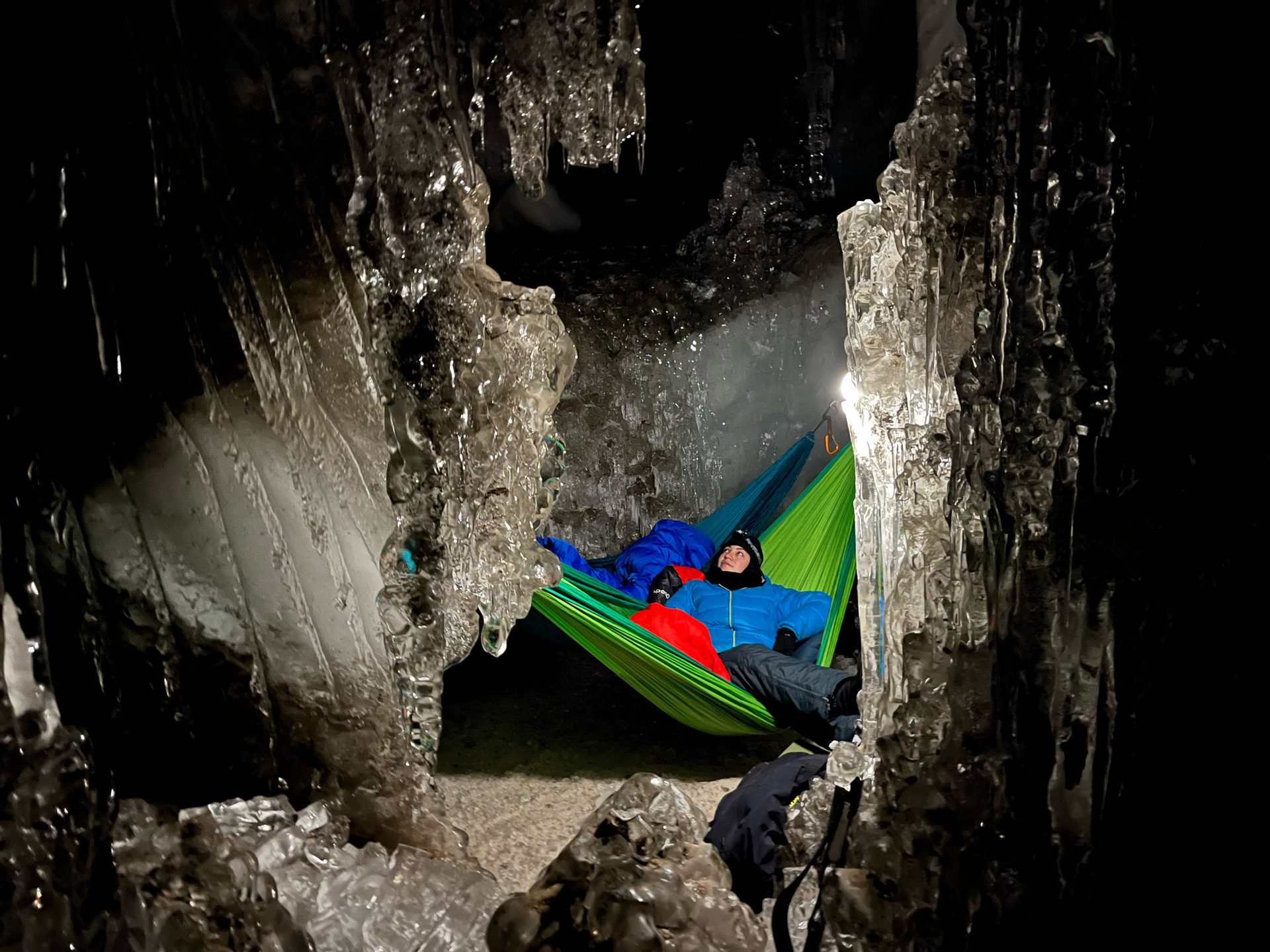
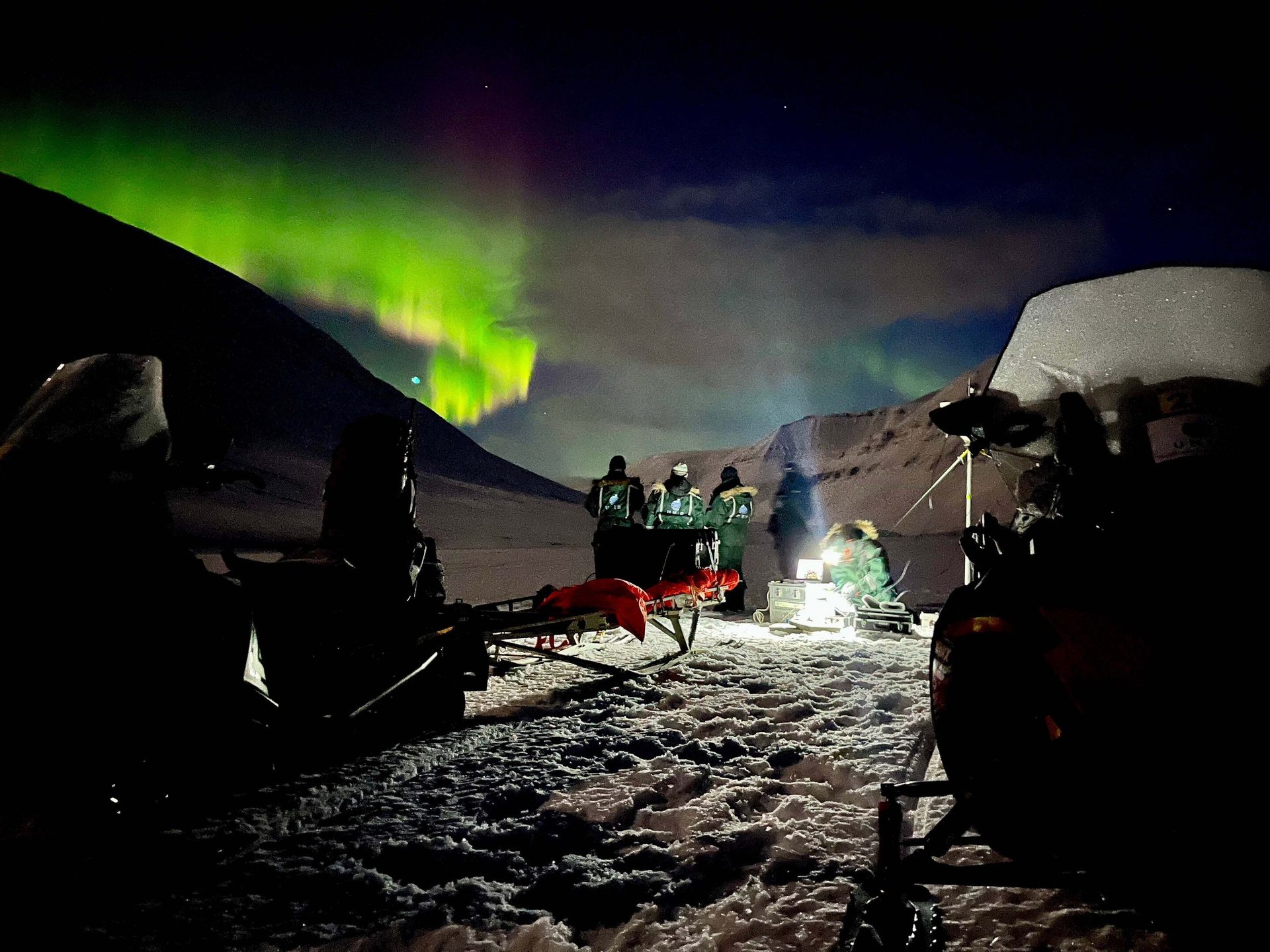
Polar bears, rifles, heat packs, total darkness. That’s the working environment for Svea and Sara, whose “classroom” today is the Arctic wilderness surrounding the University Centre in Svalbard, Norway. Svea is leveraging artificial intelligence for weather forecasting, while Sara is studying the long-range transport of pollutants to the Arctic and its effects on the local environment.
Exhilarating and meaningful, it’s the kind of fieldwork that many science students can only dream of. "You get more passionate about the work you do because it's always interesting to see how the things you study actually reflects on the real world," says Sara. "It's always very enlightening when you actually do something, and then you discover that what you studied — it actually makes sense."
Science that takes you places
“It definitely changed me a lot,” says Svea. “All those challenges from so many different fields have trained me in a very interdisciplinary way and taught me physics from a much wider perspective.”
Feeling inspired by Svea's and Sara’s journey? Make your own contribution towards a more sustainable society through Chalmers’s cutting-edge master’s programmes, and find your research focus. Whether it’s in energy, health engineering, or nano science and quantum technology, you have the chance to advance the world through the university’s outstanding research infrastructure.
Turn your research projects into impact
Learn more about the Chalmers University of Technology here.
Charles Sturt offers programmes and pathways for a wide range of aspirations. From short courses to full-time undergraduate and postgraduate degrees, there’s a perfect qualification for anyone seeking it.
More career-launching programmes
Copyright © 2026 Study International, official representative of Chalmers University of Technology